
For centuries, humanity has viewed Earth as a self-contained world, its history largely deciphered through rocks, fossils, and geological phenomena. Volcanoes, earthquakes, and shifting plates form the narrative of our planet’s physical evolution. Yet, recent scientific insights challenge this terrestrial-centric perspective by proposing an audacious idea: Earth’s deep history might be intricately linked to the vast, dynamic cycles of our galaxy. This concept invites us to reconsider how the universe’s grand structure influences planetary development—not as a background noise but as a fundamental driver shaping the very fabric of Earth’s geological record.
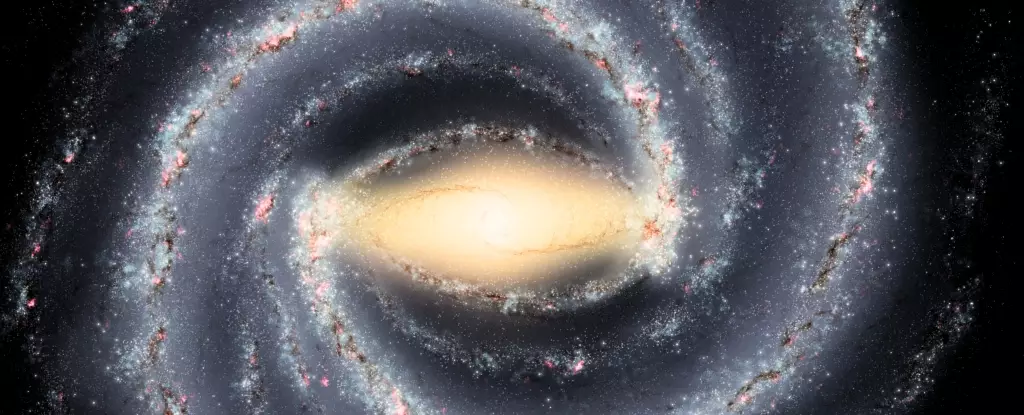
At the heart of this paradigm shift is the understanding that Earth is not isolated but continuously embedded within the cosmos. Our solar system’s journey around the galactic center exposes it periodically to the transformative conditions of the Milky Way’s spiral arms. These regions, far from being static structural features, are transient density waves teeming with stars, gas, and dust. They act like cosmic traffic jams, slowing down stellar and gaseous matter as they orbit, leading to increased interactions and, potentially, significant consequences for planets within.
The implications are profound: if passing through these dense arms influences the delivery of extraterrestrial impactors, then Earth’s history—its mass extinctions, crustal formations, and perhaps even the genesis of life—may have profound galactic underpinnings. Bridging astronomy and geology, researchers are starting to peel back the layers of this connection, with tantalizing evidence emerging from the study of resilient minerals like zircon crystals, which serve as ancient storytellers of Earth’s tumultuous past.
Mining Earth’s Galactic Past Through Tiny Time Capsules
The scientific tool at the forefront of this inquiry is zircon, a mineral capable of enduring Earth’s fiery history over billions of years. These microscopic crystals, formed during magma cooling, incorporate chemical signatures that act as time-stamped records. Variations in oxygen isotope ratios within zircons provide insights into the environmental conditions at their formation—whether they resulted from deep mantle processes or interactions at Earth’s surface.
In a groundbreaking approach, scientists have correlated the isotopic composition of zircons with models of the Solar System’s path through the galaxy. When the Solar System traverses the galaxy’s spiral arms—regions where hydrogen gas density peaks—research indicates a simultaneous rise in zircon isotope variability. This signals a period of increased crustal disturbance, possibly linked to the influx of extraterrestrial material or internal planetary upheaval triggered by galactic influences.
The idea is compelling: as the Solar System drifts through these dense spiral zones, gravitational perturbations could shake loose comets from the distant Oort Cloud, sending a barrage of impactors hurtling toward Earth. These cosmic bombardments might catalyze significant geologic events—massive volcanic eruptions, crustal melting, and tectonic unrest—that leave indelible marks in zircon records. Because zircon fossils survive again and again, they provide a long-term archive that correlates planetary change with the rhythmic passage through galactic structures.
Impacts of Galactic Cycles on Earth’s Evolutionary Path
This emerging nexus between astrophysics and geology paints a picture of Earth as a sensitive component in a larger cosmic symphony. The implications extend beyond mere academic curiosity; they challenge the conventional view that internal Earth processes solely drive planetary evolution. Instead, it suggests a model where galactic-scale phenomena—density waves, stellar migrations, and cosmic impacts—interact with Earth’s geology, influencing its orbit, climate, and even the emergence of complex life.
While the correlations are striking, skepticism remains warranted. Correlation does not necessarily imply causation, and disentangling the relative influences of internal processes versus external astrophysical forces is intricate. Nonetheless, the consistency of these findings invites a more holistic perspective—one that recognizes Earth as a component of the galaxy’s grand oscillations, rather than a closed system evolving in isolation.
Recognizing the Milky Way’s influence challenges us to expand our scientific frameworks and invites a more integrated understanding of planetary science. It underscores the importance of long-term perspective, appreciating that Earth’s story is intertwined with cosmic rhythms that span hundreds of millions of years. If validated, this hypothesis could redefine our understanding of Earth’s history, highlighting the galaxy as a key architect in shaping the conditions necessary for the development of life and the complexity of planetary systems.
Reimagining Earth’s Legacy in the Stellar Arena
This perspective elevates the role of cosmic phenomena from distant, abstract events to active, ongoing influences on Earth’s evolutionary trajectory. It pushes the boundaries of how we interpret geological data, emphasizing the need for interdisciplinary approaches that combine astronomical observations with mineral geology and climate science.
As research progresses, the scientific community must balance enthusiasm with skepticism. The challenge lies in refining models, acquiring more precise data, and developing methods to distinguish galactic effects from Earth’s internal complexity. Yet, even as uncertainties remain, the possibility that our planet’s fate is subtly intertwined with the galactic environment stirs a sense of poetic interconnectedness—a reminder that Earth’s stories are written not only in rocks but also in the stars overhead.