
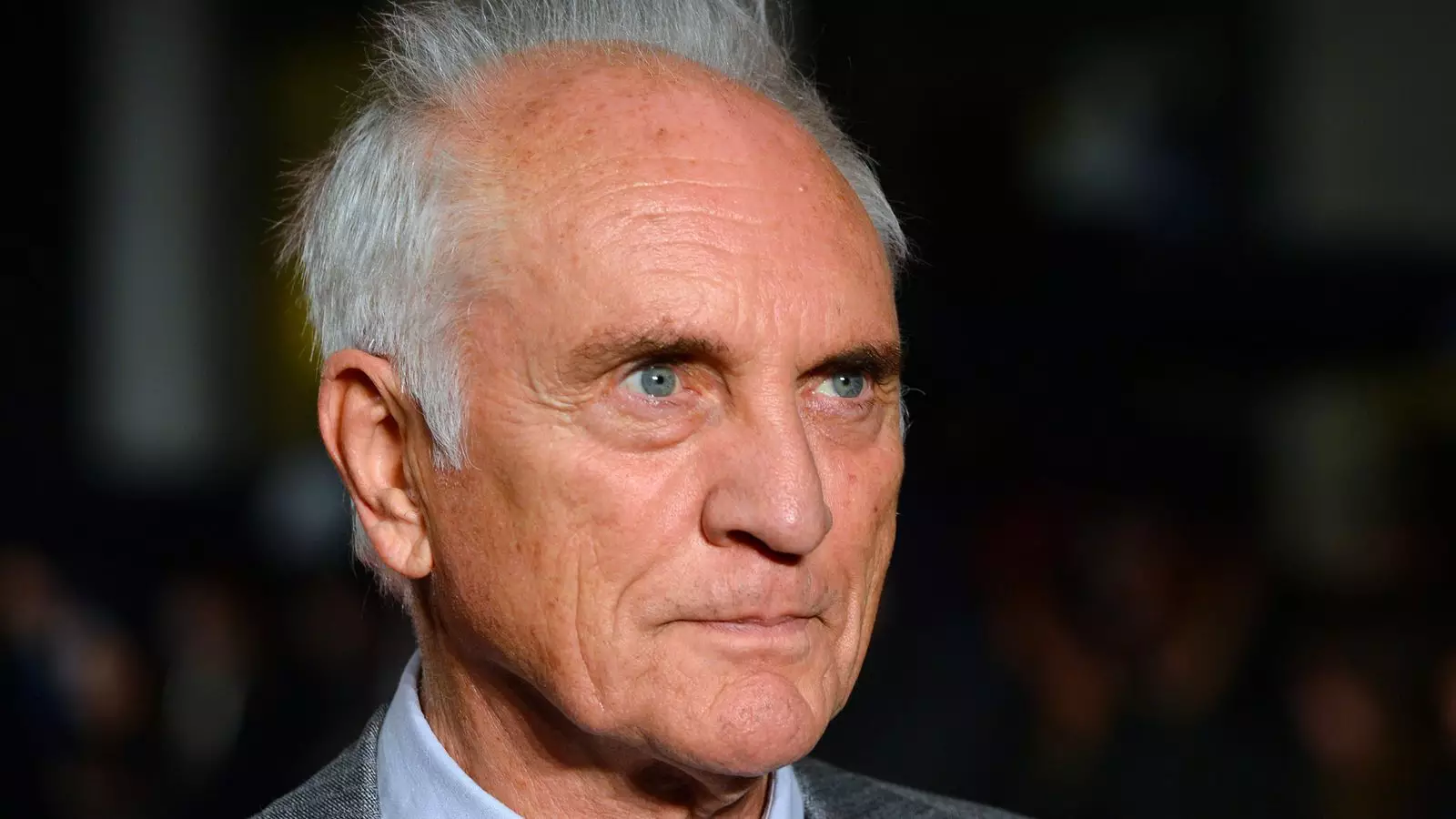
In the landscape of British cinema, few actors have embodied the intersection of gravitas and glamour as profoundly as Terence Stamp. His passing at 87 marks not merely the end of a prolific career, but underscores a journey that was as much about personal resilience as it was about artistic achievement. Raised in London’s East End during the darkest days of WWII, Stamp’s early life was fraught with hardship and upheaval. The Blitz’s relentless bombing left indelible scars on his childhood, shaping a man who would later project an intense, often enigmatic presence on screen. His decision to leave school and work in advertising before securing a scholarship to drama school highlights a tenacity that underscores his entire career—an unyielding pursuit of artistic expression despite formidable obstacles.
What differentiates Stamp wasn’t simply his talent but his refusal to conform to Hollywood’s superficial allure. His background, rooted in a gritty working-class environment and wartime trauma, lent authenticity to his performances that many of his contemporaries lacked. His trajectory from London’s East End to international recognition exemplifies a narrative of perseverance that resonates in an era increasingly disconnected from genuine storytelling. His early accolades, including a Golden Globe and a Cannes Best Actor Award, reinforced his status as a serious artist rather than a fleeting cinematic flash.
Challenging Typecasting and Embracing Complexity
Despite his undeniable success, Stamp was no stranger to the industry’s penchant for pigeonholing actors into narrow archetypes. Yet, he consistently challenged this tendency, opting for roles that showcased his range—whether playing tormented poets, sinister villains, or emotionally complex outsiders. His portrayal of General Zod in *Superman* remains one of Hollywood’s most iconic villains, but it was merely one facet of a multifaceted career. His participation in films like *The Limey*, *Valkyrie*, and *The Adventures of Priscilla, Queen of the Desert* reveal an artist willing to traverse genres and challenge societal expectations.
Critically, Stamp’s work often reflected an enduring liberal sensibility—an understanding of human complexity and social critique that set him apart from more superficial actors. His willingness to take on challenging roles, often with a darker or more conflicted edge, signals a nuanced approach to acting that aligns with his broader worldview. He was never content to simply entertain; he sought to provoke thought and emotions that lingered beyond the credits.
The Myth and Reality of Stardom
While the legend of Terence Stamp is often summarized by his role as Zod and his glamorous partnerships with stars like Julie Christie, there’s a counter-narrative about the man himself that warrants recognition. His flirtation with the esoteric, recalling a near pursuit of tantric practices in India, reveals an individual constantly seeking deeper understanding—beyond the superficial trappings of fame. His career was interrupted by long periods of inactivity, yet he leveraged these hiatuses not as setbacks but as opportunities for introspection and reinvention.
Crucially, Stamp’s legacy prompts a broader reflection on the nature of fame and the importance of staying true to one’s artistic principles. In an industry that often celebrates shallow celebrity, his insistence on meaningful roles and refusal to commodify his persona mark him as a rare figure—an artist driven by integrity rather than vanity. His venture into voice acting for video games and stage performances demonstrates a restless curiosity and commitment to the craft, reminding us that true artistry transcends fleeting trends and box office numbers.
The Controversial Yet Endearing Icon
Despite—or perhaps because of—his complex persona, Stamp’s on-screen and off-screen presence was often tinged with an air of aloofness that some found enigmatic or inaccessible. However, this detachment, in reality, masks a deeply introspective individual who navigated the fame landscape with a critical eye. His candid anecdotes about responding to fans with commanding levity—such as the now-legendary “Kneel before Zod” line—reveal a humorous self-awareness and a recognition of his impact on popular culture.
In a time where the entertainment industry often prizes superficial charm over genuine substance, Stamp’s career stands as a testament to the power of authenticity. His life reminds us that behind the camera and microphone lies a person grappling with the same fears, hopes, and contradictions as anyone else. His death prompts a moment of reflection on what it truly means to leave a legacy: not just through celebrated roles but through embodying a sense of integrity and artistic curiosity that continues to inspire subsequent generations.
This legacy, bittersweet and complex, remains relevant in a cultural climate often obsessed with fame’s trivialities. As we mourn, it is vital to recognize that Terence Stamp’s enduring body of work offers lessons—on resilience, authenticity, and the pursuit of meaning amidst chaos.