
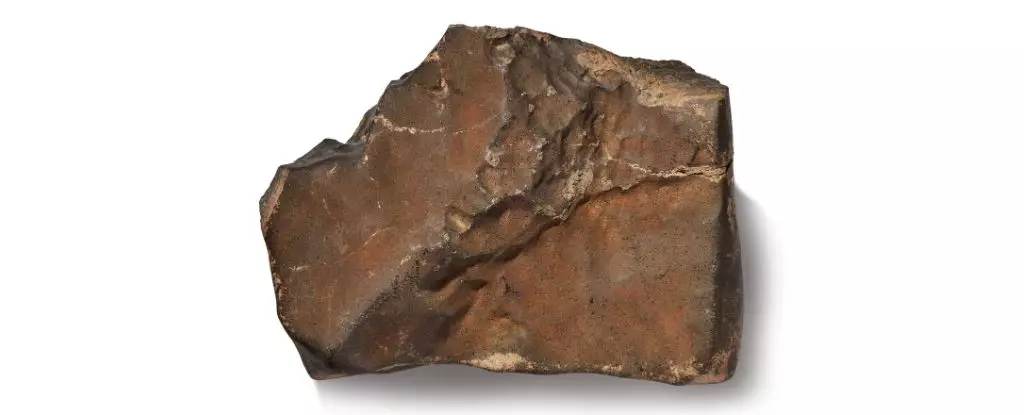
In recent years, the sale of meteorites—once solely considered objects of scientific curiosity—has transformed into a lucrative market driven by private collectors and auction houses. The recent sale of the Martian meteorite NWA-16788 for over five million dollars exemplifies this troubling trend. While it demonstrates the tremendous value placed on extraterrestrial material, it raises profound ethical questions about the commodification of entities that belong to all humanity. The fact that such a rare and scientifically valuable piece can be bought, sold, and potentially locked away from public or academic scrutiny undermines the principle that discoveries of this magnitude should serve the collective interest rather than private profit.
Far from an isolated incident, this sale signifies a broader cultural shift toward viewing celestial artifacts primarily as commodities rather than sources of knowledge. When a celestial specimen is placed into a vault, accessible only to the highest bidder, it risks losing its purpose as a scientific and educational tool. This not only hampers ongoing research but also limits the potential for public engagement and inspiration—crucial drivers for STEM education and international cooperation in space exploration. The trend fosters a model where ownership of cosmic wonders is dictated by wealth, perpetuating inequalities and undermining the shared human legacy embedded in our exploration of the universe.
Scientific Integrity vs. Market Forces: Who Truly Benefits?
The marketplace’s influence on the fate of meteorites like NWA-16788 inevitably sparks a debate about priorities in science and academia. Many experts express concern that the allure of monetary gain removes essential objects from open scientific discourse. When private owners restrict access or hinder research, our collective understanding of planetary science stagnates. The potential for groundbreaking discoveries is diminished when the raw materials are subject to commercialization instead of being available for rigorous scholarly investigation.
Furthermore, the possibility of meteorites falling into private hands raises questions about transparency and accountability. Such specimens, especially ones as pristine and scientifically significant as NWA-16788, could be kept hidden from the scientific community or, worse, misrepresented or damaged through improper handling. It is ironic that in an era where international collaboration and open data are championed as pillars of scientific progress, the highest-value specimens are being privatized, disconnected from the broader scientific enterprise that could benefit from their study.
The argument that a private individual or institution might use such a meteorite to advance scientific knowledge is optimistic at best. More often, market forces prioritize exclusivity, rarefying access and risking the destruction of the opportunity to understand these extraterrestrial materials in detail. The core issue is not just about money but about the stewardship and preservation of humanity’s scientific heritage, which should arguably be managed publicly to maximize benefits for all.
Ethical Imperatives and the Role of Society
The ongoing trend toward privatizing space-derived objects reveals societal tensions about our collective responsibility to preserve and study the universe. If we accept that celestial objects are merely assets to be bought and sold, we risk eroding the moral foundation of scientific exploration. These meteorites originate from planets, asteroids, and moons that belong to no single individual or corporation—they are the remnants of the early solar system, holding clues to our origins and future.
Many argue that these finds should be regarded as part of human heritage, deserving protection and collective stewardship. This perspective calls for stronger international agreements or regulations to ensure that access to rare extraterrestrial objects remains open and that their scientific, educational, and cultural value is prioritized over fleeting financial gains. Allowing wealthy collectors to dominate this realm not only distorts the purpose of scientific discovery but also risks creating a precedent where invaluable cosmic artifacts are hidden behind the gates of exclusivity.
It is imperative that society recognizes that the universe’s treasures are not commodities but assets that belong to all. Public institutions, governments, and international agencies must take a proactive role in establishing frameworks that safeguard our shared cosmic heritage. The sale of NWA-16788 should serve as a wake-up call—a stark reminder that the commercialization of space remains a contentious issue, demanding careful ethical scrutiny and public dialogue. Only through collective action can we ensure that these celestial clues remain accessible, inspiring future generations while honoring the fundamental scientific and moral principles that underpin our shared quest for knowledge.