
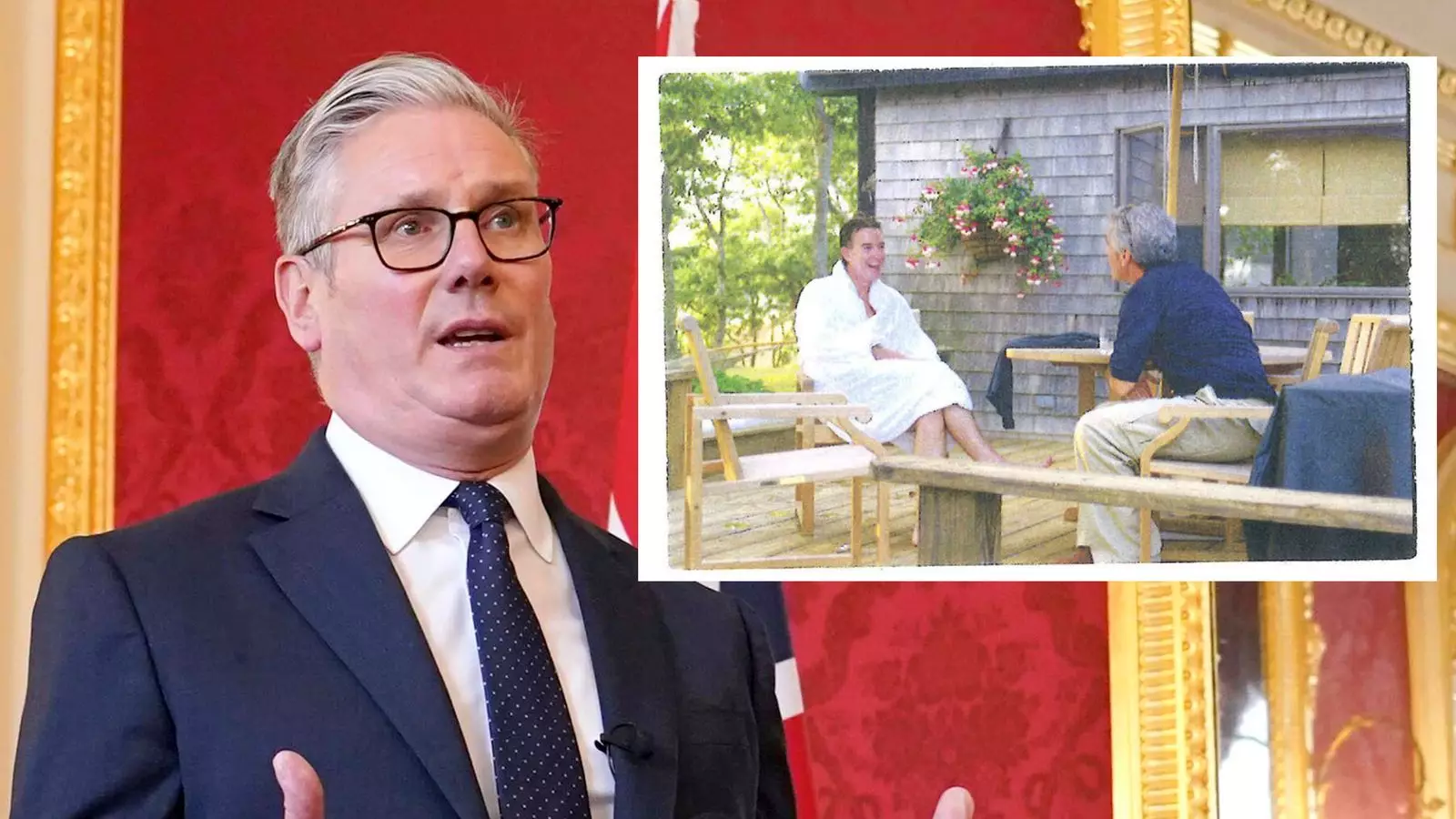
In contemporary politics, few scandals reveal the fragile veneer of moral authority more starkly than a high-profile appointment tainted by disturbing associations. When Sir Keir Starmer appointed Peter Mandelson as Britain’s ambassador to the United States, expectations of diplomatic gravitas and integrity were dashed by the emerging revelations of deep, troubling ties to Jeffrey Epstein. Such associations cast long shadows over the supposed moral compasses of the political elite, echoing a deeper malaise within leadership structures that presume the ability to overlook personal connections in favor of diplomatic utility. The fallout underscores a fundamental failure: the inability or unwillingness of our leaders to uphold a standard that transcends convenience or political expediency.
The appointment’s controversy was compounded by the supposed vetting process—or glaring lack thereof—when the government refused to disclose the procedures that led to Mandelson’s selection. This opacity fuels suspicion that moral lapses are often brushed aside when political gains are at stake, eroding public faith in institutions that are tasked with safeguarding ethical standards. When personal ties, especially those involving criminal activities or reprehensible conduct, are dismissed or hidden, it signifies a perilous abdication of responsibility. Leaders are entrusted with the duty of moral guardianship, and when they fail, they do not merely tarnish individuals—they jeopardize the very integrity of governance.
The Consequences of Moral Compromise
The political response to Mandelson’s disgrace was swift: he was removed from his diplomatic post amid mounting evidence of his closeness to Epstein. Yet, the damage had already been inflicted. The timing—just days before a significant state visit by President Donald Trump—was especially damaging, casting a shadow over Britain’s diplomatic standing and raising uncomfortable questions about the moral compass guiding those in power.
This scandal exemplifies a broader pattern where political figures are tested by the ethics of their associations. Sir Keir’s initial defense of Mandelson, followed by a quick retreat, reflects a troubling tendency to prioritize political optics over moral clarity. It is not enough to dismiss morally questionable figures when the stakes are high. Leadership demands a proactive stance rooted in integrity; a failure to do so reveals a troubling willingness to compromise core values for strategic advantage. Such compromises diminish the credibility of an entire political class and threaten the foundations of democratic accountability.
The Broader Implications for Society and Democracy
This incident is symptomatic of a troubling populist cynicism that seeps into public perceptions of governance. When politicians appear indifferent to moral boundaries, citizens become disillusioned and increasingly detached from the democratic process. The appointment of a figure linked to Epstein is not merely a personal scandal but a mirror reflecting systemic deficiencies—an erosion of the ethical standards that ought to underpin public service.
Furthermore, the scandals surrounding figures like Mandelson are compounded by the political climate in which the ruling classes often seem detached from the realities of ordinary citizens. The failure to uphold moral standards is intricately linked to the widening gap between the political elite and the society they serve. It fosters populist narratives that portray politicians as self-serving and untrustworthy—a dangerous trend that undermines the fabric of democratic institutions. For a society claiming to uphold liberal values, the lesson should be painfully clear: leadership must be anchored in unwavering moral conviction, not expedient alliances or superficial political calculations.
The Mandelson scandal is more than a personal failure—it’s a clarion call that exposes the fragility of moral standards in contemporary politics. The trust once placed in our leaders is continually tested by such scandals, and if the core values of integrity and transparency are not vigorously defended, the foundation of democratic governance itself is at risk. Leaders who betray their moral obligations—whether through negligence, complicity, or indifference—do not just harm individuals; they damage the legitimacy of the entire political system and erode the essential bonds of trust that sustain a healthy democracy.