
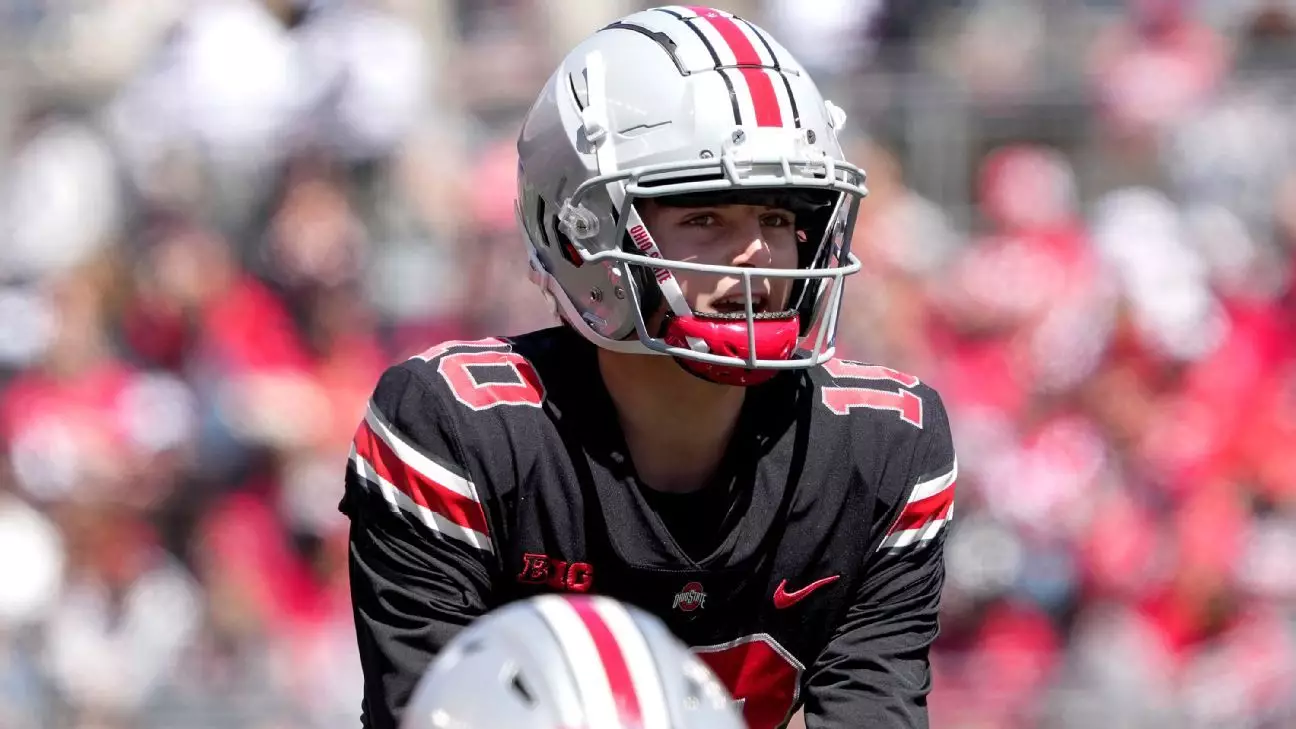
In the ever-competitive landscape of college football, hyper-focus on recruiting rankings has overshadowed the essential qualities needed to succeed on the field. Ohio State’s recent decision to name Julian Sayin as its starting quarterback over more experienced alternatives epitomizes this misguided chase for “promising” talent. While rankings and accolades can hint at potential, they rarely guarantee performance, especially in high-stakes scenarios such as opening games against top-tier opponents. Relying on a second-year player with limited in-game experience, despite a strong finish to fall camp, highlights a dangerous fallacy: that raw potential alone can carry a team through pivotal moments. It’s commendable to seek youth with upside, but a culture of impatience or superficial optimism risks undermining the stability and maturity necessary to confront formidable rivals like Texas.
Why Experience and Consistency Matter More Than Hype
Ohio State’s coaching staff claims that Julian Sayin “separated himself” over the past week, yet this should not be mistaken for a definitive signal of readiness. Consistency remains the bedrock of successful quarterbacks, especially in college football’s brutal environment. The decision to elevate a young player who has only appeared in four games — with modest statistical output — over a quarterback who has meaningful experience, even if limited, seems driven by narrative more than nuance. Lincoln Kienholz’s prior involvement and demonstrated athletic traits should not be dismissed simply because he hasn’t played since the Cotton Bowl. The real issue is that the decision appears to lean heavily on recent practice metrics, which may not translate into game-day excellence, especially against a disciplined and talented Texas defense. Ohio State risking its opener on a gamble centered on practice performance suggests a flawed understanding of what truly breeds success at the college level.
Fostering a Culture of Patience in a Fast-Paced World
There is an undeniable tension within college football programs: the allure of immediate results versus the long-term development of players. Ohio State’s decision seems to prioritize the here-and-now, possibly at the expense of nurturing a more seasoned leadership figure at quarterback. Coach Ryan Day’s remarks about the importance of “consistency” are valid, yet there is a contradiction in elevating a young player with limited game experience in a high-pressure setting. This decision sends a troubling message: that patience and developmental growth can be circumvented through short-term practice surges. Effective leadership requires more than just a strong camp — it demands composure, resilience, and the ability to thrive amidst adversity. More often than not, seasoned quarterbacks demonstrate these qualities, which are crucial against elite defenses like Texas.
The Problem With Overhyped Recruiting and the “Next Big Thing” Mentality
The modern era of college football is obsessed with recruiting rankings and “can’t-miss” prospects. Julian Sayin, as the No. 9 recruit nationally, is emblematic of this obsession. While highly touted recruits can bring excitement, their immense hype often clouds better judgment. Ohio State’s decision exemplifies how this misplaced focus on status can be detrimental. Do rankings and sophomore promise truly outweigh practical experience and proven leadership? Not necessarily. The overemphasis on recruiting hype can serve as a false security blanket, leading programs like Ohio State to gamble on untested talent in critical moments. Instead, investing in player development, patience, and the cultivation of mental toughness should be prioritized. Rushing youth into starting roles based on potential rather than proven readiness undermines team stability and can set back years of solid program-building.
Is Ohio State Falling into a Pattern of Reckless Decision-Making?
Recent decisions made by Ohio State coaching reflect a broader trend of questionable risk-taking that threatens the long-term integrity of college football programs. From prioritizing hype over experience to rushing young quarterbacks into key games, such choices suggest a culture that values immediate spectacle over sustainable excellence. While the NCAA and college sports are driven by entertainment and quick wins, schools like Ohio State should remember that sustainable success hinges on patience, strategic development, and emotional resilience. Placing too much faith in volatile practice performance and youthful hype can backfire spectacularly when facing focused, battle-hardened opponents. The real danger lies in undervaluing experience and overestimating what practice intensity alone can produce. College football demands more than bright futures; it requires wisdom rooted in history and pragmatic patience.