
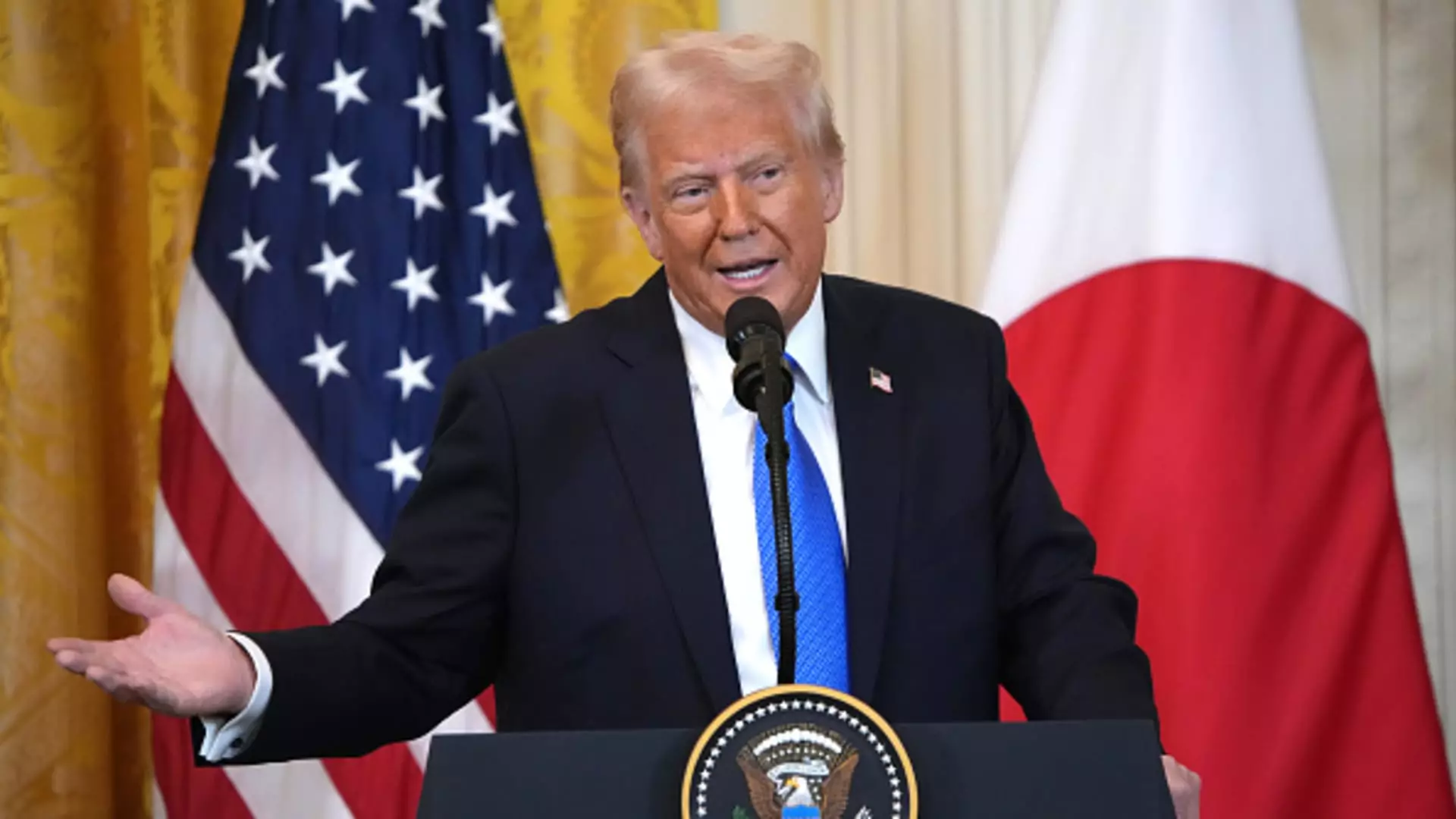
The recent announcement regarding a “massive” trade agreement between the United States and Japan raises more skepticism than excitement. While proponents herald it as a historic milestone, the reality reveals a far more complex and potentially problematic picture. The claims of a $550 billion investment and the U.S. “receiving 90% of the profits” seem inflated and overly optimistic when dissected critically. It’s tempting to view any deal with coastlines of grand promises through rose-colored lenses, but responsible analysis demands scrutiny. Are these figures reflective of genuine economic leverage or simply political posturing meant to please voters and boost short-term national pride?
The notion that such a deal could be “perhaps the largest ever made” seems exaggerated, especially given the historic scale of trade agreements in the past. Large deals are frequently adorned with lofty statements and glowing promises that often fail to materialize in substantive economic benefits. Politicians, especially those seeking to craft their legacy, tend to frame such negotiations in hyperbolic terms, sometimes at the expense of transparency.
Effectiveness in Protecting Worker and Economic Interests
One of the most contentious aspects of the deal is the anticipated boost in jobs and economic growth. President Trump’s claim that “hundreds of thousands of jobs” will be created relies heavily on optimistic projections and assumes a smooth transition. The reality is that trade agreements rarely produce headline-grabbing job booms without significant shifts elsewhere—such as employment declines in sectors left behind or automation replacing human labor.
The assumption that lowering auto tariffs to 15% will shift the economic balance in favor of US workers is dubious. Japan’s auto exports to the U.S. already have been declining—by nearly 27% in June—highlighting a broader trend of market contraction and shifting supply chains. This loss in external demand points to a structural decline rather than a simple tariff adjustment. Thus, such a trade deal may not reverse these declines but instead temporarily mask deeper economic trends that need comprehensive policy responses.
Furthermore, the promised investment of $550 billion seems disconnected from the actual economic impact. Investments on this scale, especially from a foreign nation, do not automatically translate into long-term prosperity if they are driven by strategic interests rather than genuine economic integration. It’s critical to ask whether these pledges are binding or merely symbolic gestures designed to inflate the deal’s perceived magnitude.
Political Calculations and Geopolitical Risks
The timing of this deal is unmistakably intertwined with Japan’s internal political landscape. The recent electoral losses of the ruling coalition cast a shadow over Prime Minister Ishiba’s leadership, and the deal provides a political lifeline. Framing the agreement as a “success” may be less about mutual economic benefit and more about consolidating political power. This raises questions about the sincerity and strategic intent behind these negotiations.
Adding to the skepticism is the lack of concrete details about other aspects, such as liquified natural gas deals and emerging pacts with Europe. These announcements often serve as political shows rather than substantiated policy shifts. Trade negotiations are inherently complex and slow-moving; sudden proclamations of breakthrough agreements might be more about narrative-building than real policy change.
Moreover, this kind of deal carries risks—particularly in the broader context of international relations. Relying heavily on bilateral agreements with Japan, especially when considering the fragile stability within Japan’s political system, could backfire. If internal dissent grows or if Tokyo’s economic priorities shift, the entire foundation of these treaties could be undermined.
Sociopolitical Implications and Future Outlook
The public discourse surrounding this deal clearly reveals a dichotomy: on the one hand, the excitement of potential economic gain; on the other, the sobering reality of geopolitical maneuvering and economic fragility. For center-wing liberals who believe in fair trade and balanced growth, the current narrative feels overly optimistic, bordering on wishful thinking. Promising “reciprocal” tariffs and massive investments sounds appealing, but it glosses over critical issues such as income inequality, labor rights, and environmental standards.
If the deal’s promises are left unfulfilled or are manipulated for short-term political gain, public trust in governmental negotiations will further erode. It’s essential that genuine protections for workers and sustainable practices are embedded into any trade pact — otherwise, it’s just another political stunt that benefits multinational corporations and political elites more than the everyday citizens.
As Japan’s markets respond with enthusiasm to the news, the true test will be whether these promises translate into tangible improvements for workers and consumers in the long run. For now, the deal should be approached with cautious skepticism, not unquestioning optimism. The true value of such agreements lies in their implementation, not their headlines. Only time will reveal whether this “massive” deal will genuinely reshape economic realities or merely serve as a fleeting political spectacle.