
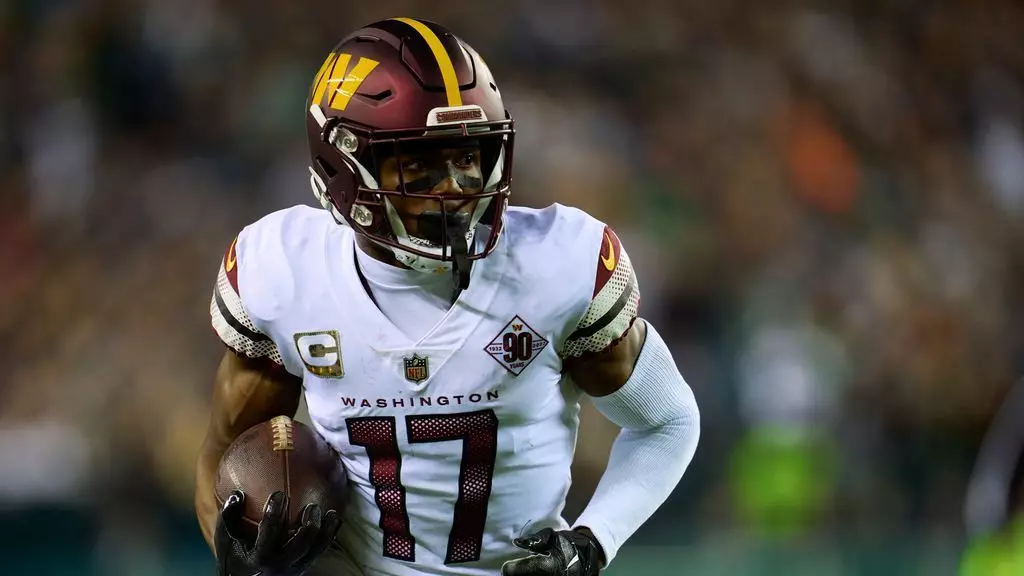
In the high-stakes, entertainment-driven world of professional football, the supposed “business as usual” narrative often glosses over the human toll and moral ambiguities involved. When Washington Commanders coach Dan Quinn dismisses Terry McLaurin’s trade request as merely part of NFL’s routine operations, it reveals a troubling tendency to normalize contract disputes and player frustrations as mere business decisions. This perspective dangerously dehumanizes athletes, reducing them to commodities whose desires are secondary to financial strategies. The assertion that players are “more aware” of contracts and that such requests are simply “normal business” shows an unsettling detachment from the reality that these are individuals with aspirations, dignity, and loyalty.
The tendency to frame such conflicts as routine diminishes the genuine emotional stress players endure. McLaurin’s request is not just a contractual negotiation; it’s a cry for recognition, fairness, and respect amid a system that often values profits over people. Quinn’s dismissiveness reinforces a myth that the NFL and similar leagues treat players with fairness or concern, when in reality, they are often pawns in a game of financial chess. The league’s veneer of professionalism and business acumen masks the underlying exploitation and disregard for the personal well-being of athletes.
The Erosion of Trust and the Cost to the Culture
The ongoing contract standoff exposes deeper cracks within the franchise culture and the broader NFL ecosystem. McLaurin’s increasing dissatisfaction highlights a troubling trend: talented players feeling undervalued or disposable once they hit a certain age or demand a compensation comparable to peers. Washington’s reluctance to meet McLaurin’s financial expectations—especially given his solid production and community impact—illustrates a systemic undervaluing of wide receivers and a reluctance to pay stars what they genuinely deserve.
When a player like McLaurin, with consistent top-tier performance, expresses a desire to leave, it’s more than just a contractual dispute—it’s a reflection of a toxic environment that prioritizes short-term flexibility over long-term loyalty and player welfare. His request underscores the brooding dissatisfaction among many NFL stars who see their careers as fleeting, with few guarantees beyond their current contract. The league’s obsession with youth and marketability fosters a culture where veterans, regardless of their contributions, are often viewed as replaceable assets instead of valued athletes.
The silence around the financial negotiations from the team perspective indicates an absence of genuine effort to bridge the widening gap. Quinn’s dispassionate stance and deferment to general manager Adam Peters suggest a team more interested in maintaining appearances than fostering genuine player relationships. Yet, this approach risks alienating core players, undermining team chemistry, and eroding fan trust—especially when the narrative is spun as just another routine business maneuver rather than a human story of ambition and disappointment.
The Heart of the Issue: Respect and Fairness
At its core, McLaurin’s predicament invites us to examine what fairness truly means in the NFL’s ruthless environment. He has been a model citizen—delivering consistent performance, embodying professionalism, and embodying the spirit of the community. His recent career milestones, including multiple 1,000-yard seasons and Pro Bowl appearances, are evidence of his value—not just as a player, but as a pillar of the team.
However, these accomplishments seem insufficient in the context of the franchise’s valuation calculus. The reluctance to offer top-market wages to a player nearing 30 perpetuates a dangerous narrative: that a player’s worth is dictated solely by age and market trends rather than merit and impact. This attitude fosters a volatile relationship between teams and players, where loyalty is undermined by an economic imperative to undervalue veterans.
Yet, McLaurin’s situation also reveals a broader societal dilemma: the failure of the sports industry to adequately balance the economic realities of franchise ownership with the inherent dignity of athletes. Players, much like workers in any other industry, deserve fair compensation, respect, and the assurance that their contributions are recognized as more than just dollar signs. The NFL’s capacity to maintain a competitive, ethical league hinges on its willingness to confront these truths rather than dismiss them as mere “business.”
Will the NFL Respect Its Human Capital?
In a landscape that champions spectacle and winning at all costs, McLaurin’s plight raises essential questions about the league’s values. Is it really about winning, or is it about maintaining profit margins at the expense of human decency? For too long, NFL teams and owners have operated within a system that commodifies athletes, treating their human stories as secondary. This mindset breeds cynicism among fans and deepens the moral chasm that separates the league from a truly equitable sports culture.
The football community needs to reckon with its priorities. Respecting players’ demands does not weaken teams; rather, it could foster a culture rooted in integrity, loyalty, and genuine mutual respect. McLaurin’s case should serve as a catalyst for revisiting how contracts and negotiations are handled—prioritizing the well-being and dignity of the athletes who make the game great, rather than merely valuing them as assets on a ledger. If the NFL continues down this path of indifference, it risks sacrificing the very integrity and social capital that make its brand powerful in the eyes of fans and society at large.