
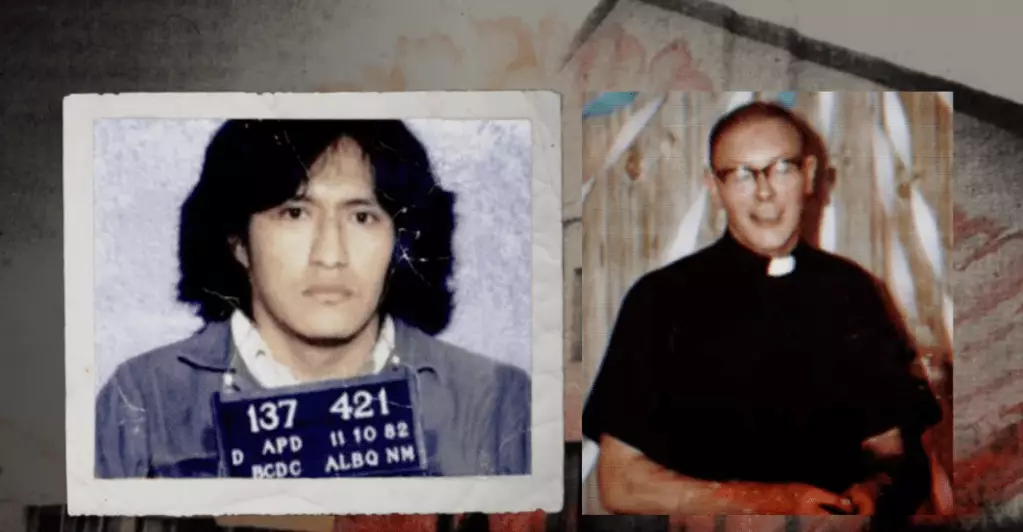
The story surrounding Father Patrick Ryan’s tragic death in 1981 serves as an anguished reminder of the deep-seated imperfections within the American judicial system. This tale, unspooled in Deborah Esquenazi’s striking documentary, *Night in West Texas*, chronicles the heart-wrenching experience of James Harry Reyos, a Native American man wrongfully convicted for a crime he did not commit. Here lies a narrative not just of wrongful imprisonment but of systemic failures in justice—an issue that reverberates far beyond Texas, evoking a national conversation about race, sexuality, and societal prejudice.
Reyos’s conviction highlights a visible intersection where homophobia blindsided the search for truth. The details of the case reveal a pattern all too familiar in contexts where marginalized individuals are disproportionately victimized. Reyos, who was closeted at the time, became a convenient scapegoat for law enforcement desperately trying to close a case, even when the evidence didn’t support their narrative. The targeting of an innocent man for the sake of political expediency and social acceptance within a conservative community presents a damning indictment of how biases can skew the very foundations of justice.
Failures of the System: A Damning Reflection
To claim that Reyos’s story is simply a localized issue would be gravely misleading. It reflects an underlying rot within a system that often prioritizes conviction rates over the fundamental tenets of justice. The fact that Reyos had a solid alibi—one that was disregarded in favor of a convenient narrative—raises critical questions about due process and the reliability of eyewitness testimony. Authorities, in their myopic frenzy to solve the case, overlooked critical evidence that could have saved Reyos from decades of wrongful incarceration.
This miscarriage wasn’t merely a fluke; it was emblematic of an enduring dichotomy in how the legal system engages with issues of identity. Law enforcement officers, guided by a primitive understanding of justice, exploited Reyos’s vulnerabilities as a closeted gay Native American man. As Esquenazi’s documentary poignantly illustrates, individuals like Reyos are often labeled as “throwaway characters” in the broader narrative of society’s ills, allowing cultural prejudices to shape judicial outcomes.
Redemption Through Re-Examination
The revitalization of Reyos’s case by Odessa’s new police chief, Mike Gerke, breathes a much-needed air of hope into this desolate narrative. Gerke’s decision to re-investigate the case—a move sparked by a true-crime podcast—serves as a pivotal moment in this saga, highlighting the vital role that new media can play in unearthing truths long buried beneath the weight of injustice. The re-examination of previously neglected evidence, including the latent bloody fingerprints at the crime scene, invites a reinvigorated public discourse around forensic processes and their implications for wrongful convictions.
The Innocence Project of Texas has taken Reyos’s case to heart, launching a relentless effort to clear an innocent man’s name. This collaboration of activists and legal professionals illustrates the power of community and collective action in addressing systemic failings. The film effectively sheds light on how collaborative storytelling can mobilize public interest and shine a spotlight on injustices that too often go unnoticed.
A Reflection on Contemporary Justice
Esquenazi’s *Night in West Texas* transcends the boundaries of documentary storytelling; it is a powerful indictment of a judicial system that fails to respect the dignity of individuals. It forces viewers to grapple with uncomfortable truths about society’s failings in the treatment of marginalized populations. This film does not only highlight injustices faced by the LGBTQ+ community and people of color—it compels its audience to interrogate the narratives we construct around crime, punishment, and innocence.
In examining Reyos’s experience, Esquenazi parallels broader issues of systemic racism and homophobia that continue to pervade the American landscape. As stories of wrongful convictions continue to surface, it becomes increasingly clear that the imperfections of our justice system demand urgent reevaluation. Through its intense emotional lens, *Night in West Texas* serves as a call to action, a stark reminder that justice remains an ongoing struggle for countless individuals whose lives have been irrevocably altered by systemic negligence.