
For decades, the icy waters of the Southern Ocean have been perceived as a bleak, static environment, insufficiently active in the grand scheme of climate regulation. Conventional wisdom suggested that these frigid depths were too inhospitable for the microorganisms responsible for capturing carbon, relegating the Southern Ocean to a passive player in global carbon cycling. This outdated narrative perpetuated a sense of complacency about one of Earth’s most vital yet underestimated climate assets. Recent scientific revelations, however, cast this complacency into stark question, forcing us to confront the reality that our understanding of the ocean’s role in climate moderation might be fundamentally flawed.
The discovery of coccolithophores thriving in these extreme environments challenges long-held assumptions. These microscopic algae—famous for their shimmering calcite shells—are renowned for their role in absorbing inorganic carbon and contributing significantly to the ocean’s reflectance. Previously, scientists believed these organisms primarily dominated the temperate and subtropical zones, thanks to their sensitivity to temperature. The idea that they could flourish near the poles seemed improbable. Yet, new data suggest that microbial life has a far more complex and resilient relationship with the cold southern waters than anyone dared imagine, unraveling the myth of the ocean’s inertness.
This scientific breakthrough serves as a powerful reminder: environmental phenomena are rarely simple, and our scientific models must evolve to keep pace with new evidence. The presence of coccolithophores in these icy expanse indicates that even in the most unforgiving climates, microbial communities are active agents of biogeochemical cycles. They are not mere passive inhabitants but dynamic participants capable of influencing global climate feedback loops. By understanding this, we begin to appreciate the urgency of integrating these unexpected players into climate science and policy, acknowledging that the battle to stabilize Earth’s climate extends into the most unlikely environments.
Challenging the Oversimplified Climate Narrative
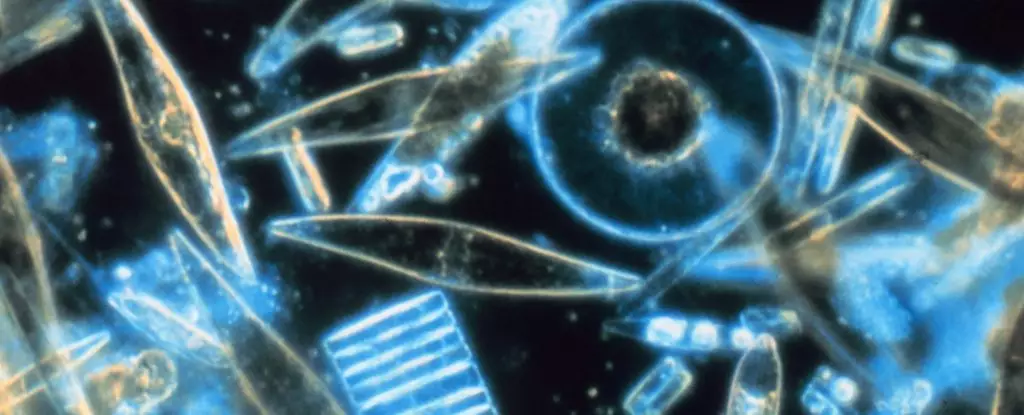
The narrative that the Southern Ocean is a sluggish, ineffective carbon sink has broader implications, particularly when it is used to justify complacency in climate action. If policymakers and scientists continue to underestimate the ocean’s potential, they risk neglecting vital natural processes that could help mitigate the worst effects of climate change. The recent discovery that diatoms, not coccolithophores, are likely responsible for the high reflectance observed in southern polar waters exposes a critical flaw in remote sensing techniques—the tools often relied upon for estimating the ocean’s capacity to absorb carbon.
This revelation underscores a broader problem: science often advances in steps, yet our understanding remains incomplete and frequently misinterpreted when based on limited measurement techniques. Satellite data, while invaluable for global-scale observations, can only tell part of the story. The misidentification of key microorganisms, such as coccolithophores, highlights how technological limitations can obscure the true complexity of ocean life. When environmental models are based on oversimplified assumptions, they risk offering policymakers an overly optimistic view or, worse, a dangerous blind spot.
Recognizing these limitations should serve as a catalyst for reform—it’s time to rethink how we monitor, interpret, and act upon oceanographic data. A shift toward more direct, in-situ observations enriches our understanding, revealing hidden ecosystems and their roles that satellite imagery can’t grasp alone. This complexity reflects the interconnectedness of climate systems, where microorganisms, ice, and particulate matter interact in ways that cannot be distilled into neat models or projections. The challenge is to embrace this complexity, acknowledging that the ocean’s true capacity for carbon sequestration is perhaps even greater—and more intricate—than previously assumed.
The Resilience of Marine Microorganisms and the Need for a Paradigm Shift
The notion that coccolithophores are confined to specific, temperate zones is now being challenged by evidence of their surprising adaptability. Their presence in these icy waters suggests that these microorganisms are more resilient—and perhaps more vital to climate regulation—than traditionally acknowledged. Diatoms, often dismissed as merely competitors or secondary players, could be equally significant, especially when their reflective silica frustules contribute to the ocean’s albedo effect.
This raises fundamental questions about the diversity and resilience of marine life under changing climate conditions. If the Southern Ocean hosts thriving coccolithophore and diatom populations, then the potential for these microorganisms to act as natural climate buffers is greater than previously thought. It also hints at the overlooked importance of biodiversity in climate mitigation strategies. Marine microorganisms are not passive players but active agents capable of adapting to drastic environmental shifts, providing a natural counterbalance to human-induced warming.
Nonetheless, the scientific community must be cautious about rushing to conclusions. What remains clear is that our existing models lack the nuance required to accurately predict the ocean’s role in future climate scenarios. A paradigm shift is imperative: instead of viewing the Southern Ocean as a static zone of minimal biological activity, we should recognize it as a vibrant, complex ecosystem capable of significant carbon absorption. This recognition demands more detailed, multidisciplinary research and a reassessment of how our environment is portrayed in the context of climate solutions.
Implications for Climate Policy and Global Responsibility
In light of these scientific revelations, there is an urgent need for a recalibration of climate policy—one that appreciates the hidden potential of Earth’s natural systems. Relying solely on technological solutions or reducing emissions without harnessing or protecting the resilience of ecosystems like the Southern Ocean would be a profound mistake. The ocean’s microscopic inhabitants are crucial components of a natural infrastructure that, if properly supported and studied, could serve as a primary line of defense against runaway climate change.
This understanding also presses us into a moral and political dilemma: should we continue to neglect the importance of preserving fragile marine ecosystems, or should we invest wholeheartedly in their protection? Recognizing the unexpected vitality of these ecosystems should inspire a centered, balanced approach—one that combines technological innovation with ecological stewardship. We are not masters over nature but stewards who must respect and harness its innate capacities.
As the scientific community uncovers more layers of complexity within these remote waters, the implications ripple outward into our environmental policies and global responsibilities. Acknowledging the resilience and adaptive capacity of marine microorganisms underscores the urgent need for international cooperation to safeguard these ecosystems. Doing so is not merely an act of environmental conscience but a practical, scientific necessity for maintaining the delicate balance needed to sustain life on Earth.