
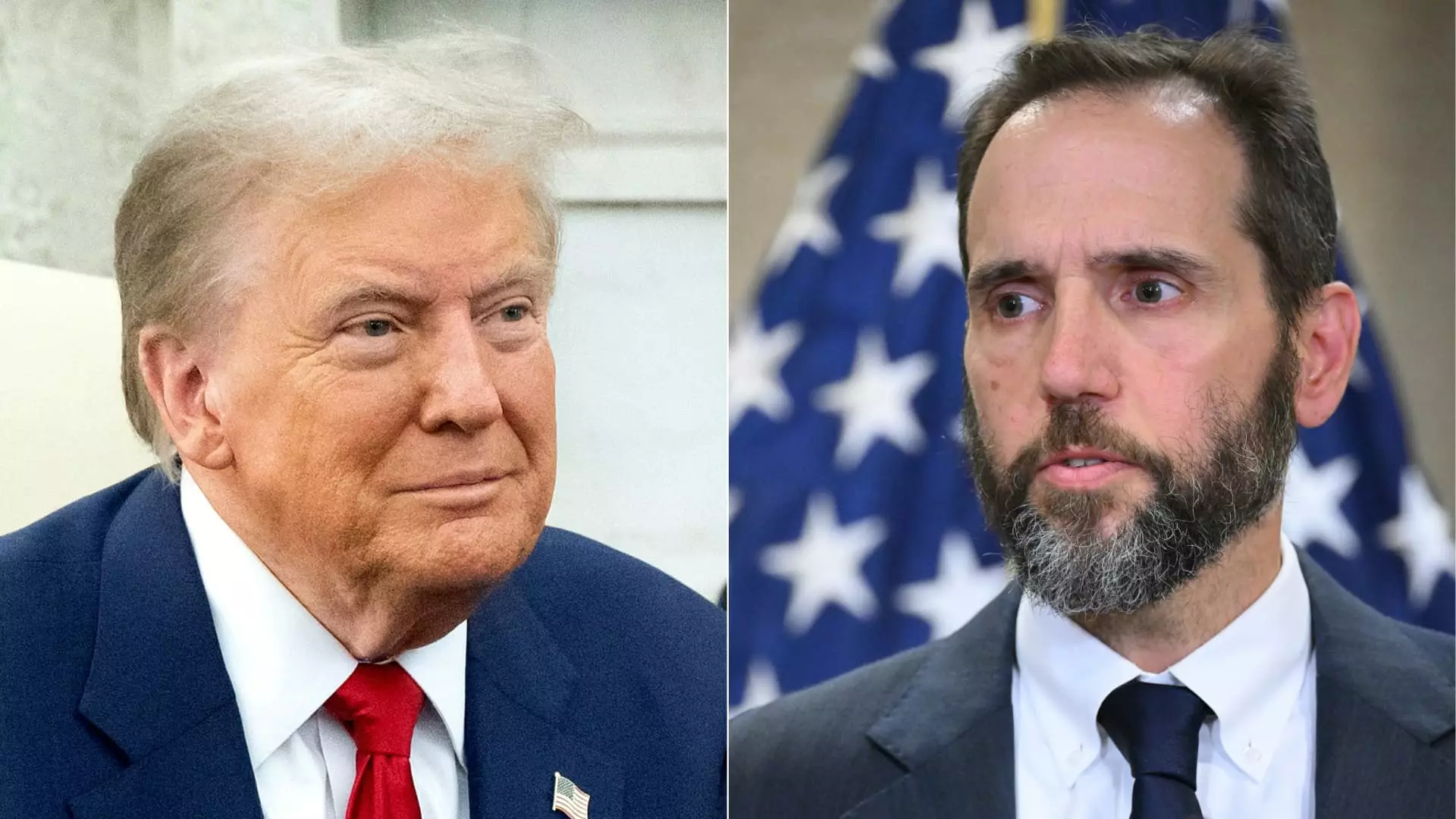
The recent scrutiny of former Special Counsel Jack Smith exemplifies how political motives can distort the fabric of justice, undermining the very independence that institutions like the Office of Special Counsel are supposed to uphold. While the agency’s investigation of Smith for alleged violations of the Hatch Act might appear as a neutral effort to enforce federal regulations, it strongly hints at a politically motivated attempt to tarnish a figure who has become emblematic of the Biden administration’s efforts to target political opponents. Without concrete evidence or a clear legal basis, these claims seem more like a weapon wielded in the ongoing partisan war rather than a genuine pursuit of accountability.
The Office of Special Counsel, unlike judicial or prosecutorial entities, is designed to function as an administrative body capable of disciplining federal employees, not to serve as a criminal prosecutor. Yet, the narrative that this agency is now investigating Smith for political interference raises troubling questions about the line between oversight and political weaponization. The timing of these investigations—coming after Smith’s high-profile indictments of Trump—appears to be less about enforcement of rules and more about political retribution. This selective targeting fuels doubts about whether justice is being served or if it is being weaponized for electoral gains.
Politicized Enforcements and the Erosion of Fairness
When prominent Republicans like Senator Tom Cotton publicly accuse Jack Smith of “unprecedented interference” in the 2024 election, it becomes clear that their motivation is to delegitimize Smith’s actions rather than to seek genuine accountability. Cotton’s assertion that Smith’s investigations are part of a “biased campaign” reveals a narrative designed more to undermine public confidence in the justice process than to address actual violations. This strategic framing diminishes the importance of the Hatch Act, turning it into a political pawn meant to damage an individual and, by extension, the Biden administration.
Furthermore, calls for investigations that lack transparent, evidence-based backing highlight a disturbing trend: allegations are weaponized to sow distrust in institutions meant to uphold fairness. The oversight process—based largely on political whim—threatens to weaken public confidence in a system that should be based on neutral application of laws. It’s especially troubling that similar actions, like the 2019 recommendation to censure Kellyanne Conway, did not escalate into criminal investigations but remain part of a double standard selectively applied depending on political affiliation.
The Dangerous Path of Judicial Partisanship
This ongoing saga underscores a broader issue—how the clouds of political bias threaten the integrity of American justice. The pursuit of justice should be driven by facts, not by political expediency. Yet, the current landscape reveals a propensity for institutions to be co-opted as tools for partisan warfare. Crooked narratives, heavily driven by rhetoric rather than substantive evidence, threaten to erode the foundational principle that justice is blind and impartial.
The stalled confirmation of Paul Ingrassia, a controversial nominee to lead the OSC, exemplifies this institutional paralysis. Partisan battles over appointments diminish the independence of oversight bodies, stoking fears that these agencies are no longer safeguard mechanisms but political pawns. If such investigations continue to be driven more by political agendas than by actual violations, the core legitimacy of American institutions will suffer—a cost that far outweighs any perceived need for political retribution.