
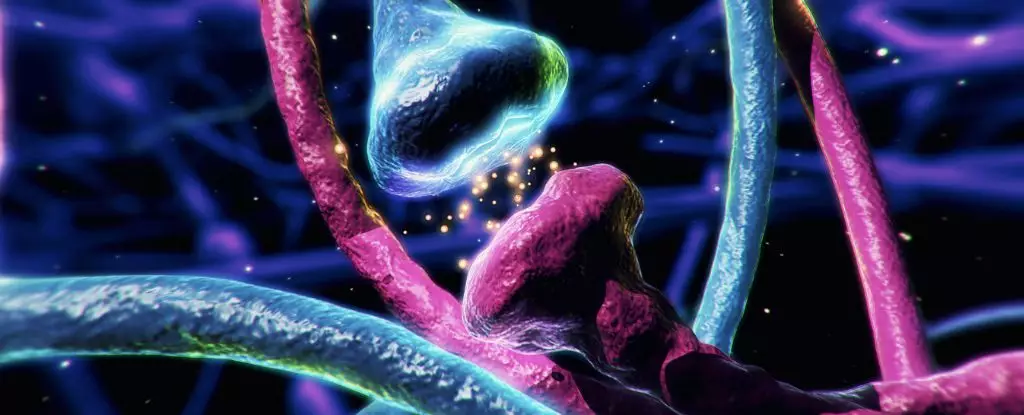
For decades, dopamine has been pigeonholed as the brain’s “feel-good” chemical, largely responsible for reward, motivation, and mood regulation. Popular narratives simplified it to a messenger that spreads signals across vast neural territories, fostering an overarching understanding that its influence is broad and diffuse. But recent scientific revelations threaten this oversimplified view, exposing a far more intricate and dynamic system—one that challenges longstanding assumptions and beckons a reevaluation of how we understand human behavior and neurological health.
The emerging evidence suggests that dopamine does not solely act as a slow, widespread broadcast but also functions as an agile, targeted courier, capable of transmitting rapid, localized signals within milliseconds. This dual-mode operation implies that the brain’s messaging system is far more sophisticated, resembling a finely tuned network rather than a monotonic megaphone. Such a discovery suggests that our previous models may have grossly underestimated the specificity and precision inherent in dopamine signaling, raising profound questions about how we interpret neural communication and dysfunction.
From Diffuse to Precise: Rethinking Neural Signaling
Traditional neuroscience has long conceptualized dopamine as a diffuse chemical signal, diffusing through the brain like a fog to activate widespread neural populations. This was an elegant but somewhat superficial explanation, offering a blanket understanding of reward pathways and mood regulation. However, this perspective neglects the possibility of micro-level communication, where a single neuron could precisely influence a neighboring cell within a fraction of a second.
Recent studies utilizing advanced imaging techniques have begun to peel back the layers of this mystery. For instance, researchers have demonstrated that dopamine can be released in a localized manner, activating only a small cluster of neurons in the striatum—the brain area pivotal to movement and reward. These targeted signals generate immediate, rapid neural responses that are fundamentally different from the slower, more systemic dopamine broadcasts previously assumed. This nuance suggests that the brain can finely tune its responses based on immediate, highly specific demands—an essential feature for decision-making, movement, and complex behaviors.
This revelation prompts a critical reassessment of how neural codes are structured. Dopamine’s ability to communicate both rapidly and locally, alongside its slower, widespread actions, hints at a layered signaling hierarchy. Fast, precise signals might govern immediate responses or fine motor control, while slower, diffuse signals could modulate overall mood or long-term learning. Recognizing this complexity could open new pathways for understanding neuropsychiatric disorders, where the delicate balance of these signaling modes may be disrupted.
Implications for Neurological Disorders and Therapeutic Strategies
The significance of this updated understanding extends far beyond academic curiosity; it strikes at the core of treating debilitating neurological and psychiatric conditions. Disorders such as Parkinson’s disease, schizophrenia, addiction, and ADHD involve aberrant dopamine signaling. Current treatments primarily aim to restore or compensate for dopamine deficits or excesses, but often with limited success and significant side effects.
If dopamine’s signaling is indeed more spatially precise and dynamically complex than previously believed, then current pharmacological approaches may be overly blunt instruments—treating symptoms rather than targeting the root causes of dysfunctional signaling. A shift in perspective towards understanding the microdomain-specific roles of dopamine could lead to highly targeted therapies that modulate specific signaling pathways, restoring balance without disrupting the entire system.
Moreover, acknowledging that dopamine operates both as a broad broadcast and a pinpoint whisper invites innovative concepts like modulation of local dopamine release or receptor activity. Such strategies could revolutionize how we approach neurodegenerative and neuropsychiatric diseases, shifting from mere symptom management to sophisticated, tailored interventions that address the precise neural circuitry involved.
Challenging the Status Quo and Embracing Complexity
Ultimately, this evolving picture of dopamine underscores a fundamental truth: the brain’s communication network is immensely intricate. It defies reductionist models and demands a nuanced appreciation of how neural signals orchestrate behavior. Accepting this complexity is not a concession to scientific uncertainty but an imperative for progress, especially in fields where conventional wisdom has stagnated.
The recognition that dopamine can be both a wide-ranging messenger and a microsecond whisper challenges scientists and clinicians alike to move beyond oversimplified frameworks. It urges us to develop more refined tools, more sophisticated theories, and ultimately, more effective treatments rooted in an authentic understanding of the brain’s elaborate signaling tapestry. The implications of these discoveries are profound—demanding humility in our models and a relentless pursuit of knowledge that respects the true complexity of our neural universe.