
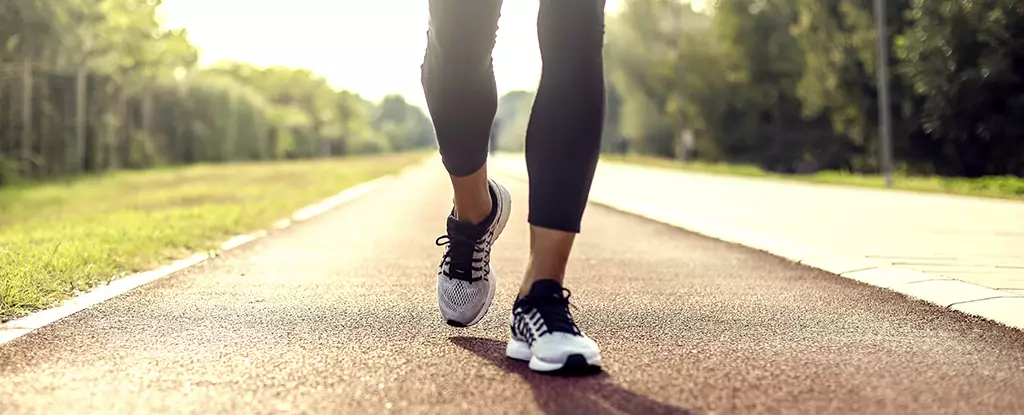
For years, public health messaging has championed the virtues of physical activity, urging us to get off the couch and move more. But what if the true secret to longevity isn’t just about how much we walk, but *how* we walk? Recent findings challenge conventional wisdom, revealing that the pace at which we traverse our daily routines could drastically influence our life spans—particularly among marginalized communities long overlooked in health research. This isn’t about adding trivial minutes to our day; it’s about recognizing a powerful, yet simple, lifestyle change that could tilt the scales toward better health for underserved populations.
The research from Vanderbilt University scrutinizes a vast pool of nearly 80,000 adults, predominantly Black and low-income individuals, shedding light on a demographic often invisible in health studies. It’s telling that these findings address gaps that have persisted for too long: communities that endure socioeconomic disadvantages and limited access to safe walking spaces. By focusing on the relationship between walking speed and mortality, the study emphasizes a vital truth—small, achievable modifications in everyday movement may wield outsized health benefits.
What stands out most is the clear link between brisk walking, just 15 minutes a day, and a nearly 20% reduction in overall mortality risk. Importantly, these safe-to-achieve efforts are not about intense workout routines but about integrating deliberate, faster-paced walking into daily life. Whether someone is climbing stairs or briskly walking to catch a bus, these movements impact heart health considerably. It’s an empowering revelation—especially for those who might feel excluded from traditional exercise recommendations that often assume availability of gyms or outdoor spaces.
This focus on pace challenges us to rethink how we consider physical activity. The assumption that all walking is equally beneficial is misleading. Slower walking, such as walking a dog or strolling through the neighborhood, offers some benefit but pales in comparison to the cardiovascular gains of faster walking. The latter forces the heart to work harder, improving efficiency, boosting circulation, and ultimately extending life expectancy. It’s a reminder that movement is not monolithic; quality and intensity matter, especially when confronting health disparities rooted in inequality.
Addressing Systemic Barriers with Simple Solutions
This research brings to surface a broader societal issue: health inequity. Marginalized populations often live in environments where safety, infrastructure, and resources to support vigorous activities are scarce. Yet, the message remains the same—walking fast is a remarkably accessible intervention. No gym memberships, expensive equipment, or specialized training required. The challenge isn’t just encouraging individuals to walk faster, but fostering community environments that empower and facilitate such behavior.
In a nation where urban planning often neglects low-income neighborhoods, advocating for safe, walkable streets becomes a crucial step in democratizing health benefits. Public health campaigns should prioritize educational efforts that normalize brisk walking as a simple, powerful act of self-care. Policymakers need to understand that investment in safe infrastructure—sidewalks, parks, lighting—translates directly into healthier, longer lives. Personal responsibility alone isn’t enough; systemic change is crucial to give everyone the opportunity to access the health benefits indicated by this study.
Moreover, community-driven programs can build social momentum around this practice. Schools, local organizations, and workplaces could promote walk-at-your-own-pace initiatives—but with a push to increase speed when feasible. Community leaders can advocate for policies that make brisk walking both desirable and safe, addressing barriers like unsafe neighborhoods, traffic dangers, or insufficient public spaces. Only by doing so can we bridge the gap between knowledge and action, ensuring that the benefits of faster walking are accessible to those most at risk.
This pivotal research underscores that health isn’t solely a matter of personal discipline but a reflection of societal structures. While encouraging individuals to walk faster is vital, true progress hinges on tackling the environmental and social inequities that hinder access to safe, active living. Health promotion strategies should therefore shift from individual blame to collective responsibility, emphasizing systemic changes that democratize the ability to incorporate revitalizing movement into daily routines.
By elevating the importance of walking speed—arguably the most basic form of exercise—we acknowledge that health disparities are intertwined with accessibility and social justice. The simple act of walking briskly for 15 minutes may seem trivial, but to marginalized communities, it is a profound opportunity to reclaim health and longevity. It is time for policymakers, community leaders, and individuals alike to recognize that sometimes, the smallest steps—when taken at the right pace—can lead to the most significant societal transformations.