
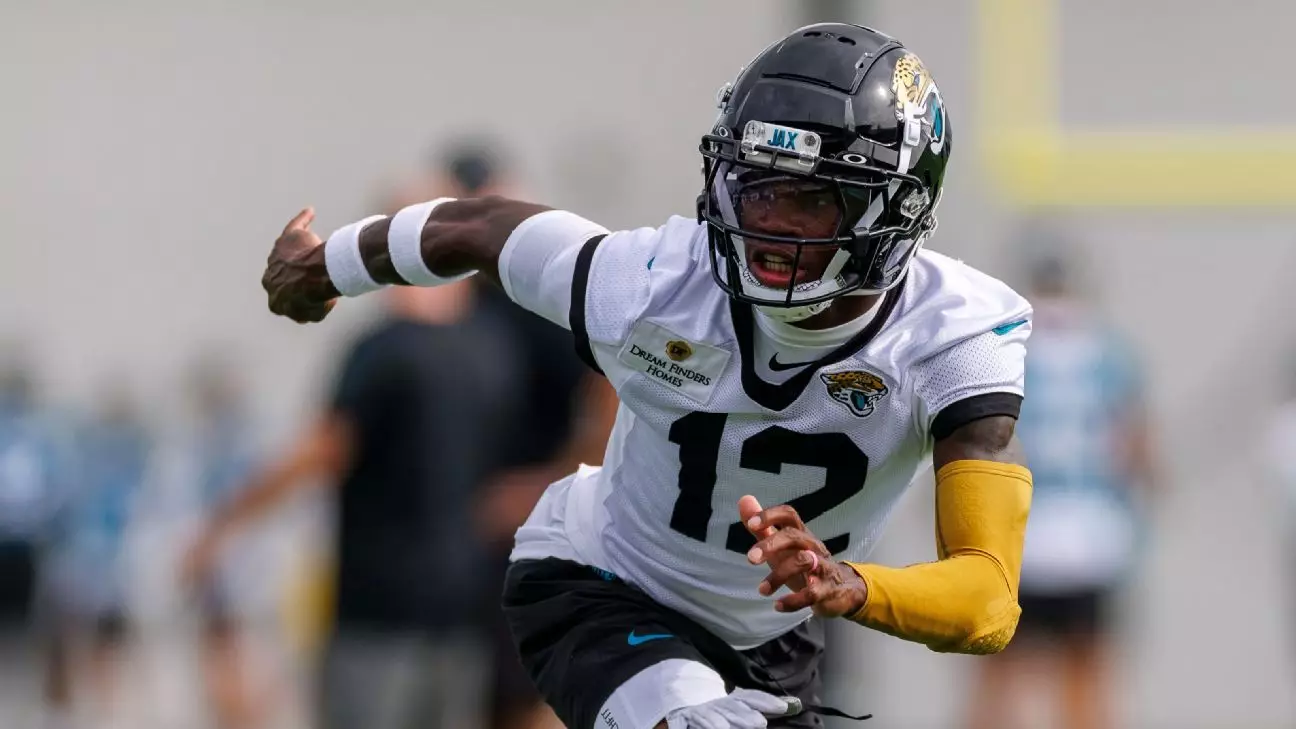
In an era where specialization and strategic complexity define the NFL, Travis Hunter’s pursuit of becoming the league’s first true two-way player in over six decades is nothing short of audacious. While the historical precedent set by Chuck Bednarik underscores the rarity and difficulty of such a feat, placing the onus on a rookie to master both offense and defense under high-pressure conditions may be an imprudent gamble. The modern game demands precision, endurance, and mental sharpness, not to mention the physical toll, which makes the idea of a two-way player seem more like a nostalgic relic than a practical innovation.
The Jacksonville Jaguars’ approach to Hunter’s training is gradually cautious, recognizing that rushing him into full dual responsibilities could backfire. This measured strategy suggests an acknowledgment that mastering two distinct playbooks, as Hunter is required to do, is a monumental task for even seasoned players, let alone a rookie. It implicitly questions whether the NFL has become too crowded with highly specialized athletes, leaving little room for a unique breed to thrive without risking burnout or significant underperformance. Pioneering the path for a two-way star might be inspiring, but it also risks setting a dangerous precedent—one where the allure of novelty eclipses the realities of player health, team stability, and long-term development.
The Psychological Quandary of Playing Both Sides
Hunter’s capacity to swiftly switch mindsets between offense and defense epitomizes the mental resilience required for such a demanding schedule. Yet, this mental juggling act also exposes a potential weakness in the newcomers’ adaptability. It’s one thing to participate in practice drills, and quite another to execute seamlessly in live games, especially when the pressure intensifies and split-second decisions become the norm. Expecting a rookie to instantly acquire mastery over complex terminologies and responsibilities could be an overreach of coaching optimism.
The reliance on this “slow build” approach signals that the coaching staff understands the peril of overwhelming Hunter. However, it also raises questions about whether this strategy might inadvertently hinder his overall development. Should not the focus be on nurturing a player’s specialization and expertise in one role at a time to ensure mastery before trying to combine them? Pushing a young athlete into dual responsibilities early on might sacrifice depth in their primary position, ultimately making them more vulnerable to injuries or mental fatigue.
Furthermore, the mental load Hunter faces extends beyond just knowing two playbooks; it involves maintaining heightened awareness and agility on both sides of the ball. This level of cognitive demand could become a double-edged sword—driving innovative gameplay while risking intellectual overload. It remains to be seen if such high expectations are sustainable or if they merely serve as a glorified experiment with uncertain outcomes.
Questionable Long-Term Benefits and Potential Risks
While the allure of having a seamlessly versatile player like Hunter is undeniable, the pragmatist in me strongly questions whether the NFL is truly ready to integrate such hybrid athletes into its ecosystem. The sport’s physical demands already place tremendous stress on players’ bodies, and adding the mental and physical burden of dual participation could expand injury risks rather than mitigate them.
On one hand, this bold approach could introduce a new strategic dimension, exploiting the element of surprise and versatility. Yet, entrenched in a center-left liberal perspective that advocates for safer, player-centric innovations, I argue that pushing young athletes into roles that demand both offensive and defensive mastery may prioritize entertainment value over athletes’ well-being. It risks commodifying these players, turning them into chess pieces rather than individuals with long-term health considerations.
Moreover, the narrative surrounding Hunter’s journey—his unfazed attitude and quick adaptability—might mask the harsher realities of burnout and injury. The NFL’s history has shown that once promising multi-role players often succumb physically or psychologically under the weight of such expectations. Political and moral responsibility implies that the league should prioritize sustainable player development over chasing groundbreaking, yet precarious, feats.
The concept of a two-way player, though historically romanticized, belongs more to an era of rugged, less specialized football. Today’s game demands a balanced approach: encouraging versatility without sacrificing the health, career longevity, and mental stability of players. Hunter’s case, while intriguing, stands as a cautionary tale about the overreach of innovation driven by bold experimentation rather than cautious, evidence-based evolution.