
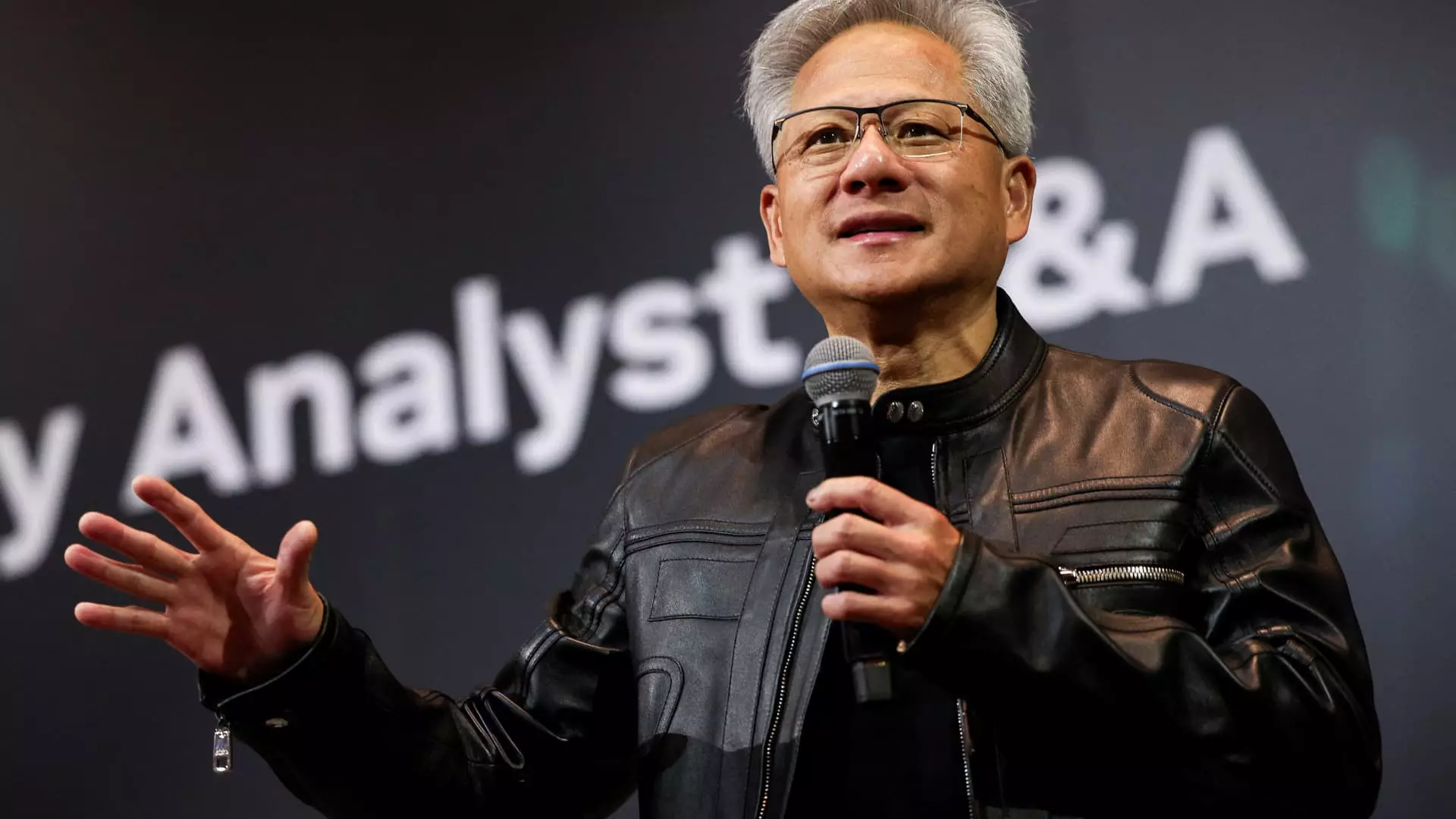
The recent praise for Taiwan Semiconductor Manufacturing Company (TSMC) from Nvidia’s CEO Jensen Huang reveals more than just admiration; it exposes a reckless complacency in American and global strategies around semiconductor leadership. By elevating TSMC to the status of a “greatest company in human history,” Huang is not only romanticizing Taiwan’s technological empire but also ignoring the underlying vulnerabilities, geopolitical tensions, and economic fragility that threaten the entire industry. Such blind faith in Taiwan’s chipmaker champions a narrow view that sidesteps the risks of overdependence on a geopolitically sensitive region. If we are to be intellectually honest, we should question whether putting our technological future in the hands of a politically tense island is a sustainable strategy or a dangerous gamble that could backfire spectacularly.
U.S. Policy as a Mirage of Control
The United States’ strategic investment via the CHIPS Act and the potential for government stakes in giants like Intel, Micron, and even TSMC, exemplifies a misguided attempt to force national dominance through financial muscle. While Washington touts these investments as a renaissance of American semiconductor sovereignty, they mask the deep systemic flaws in relying heavily on a globalized supply chain. The narrative pushed by policymakers is that these investments will stabilize and secure America’s technological future, but in reality, they deepen the vulnerabilities. Foreign companies like TSMC are not mere service providers—they are geopolitical actors whose loyalty and decisions are influenced by Taiwan’s complex relationship with China and the US. Promoting the idea that government stakes will ensure “security” underestimates the fluidity of global alliances and economic dependencies.
The Illusion of Power in Government Stakes
The desire for the U.S. to acquire equity stakes in semiconductor firms, including TSMC, is a strategic folly cloaked in national security rhetoric. These moves suggest a hubris—an overestimation of government influence over private enterprise at a high technological level. Navigation of geopolitics with governmental ownership risks making these companies political pawns, vulnerable to diplomatic tug-of-wars and internal pressures. Not to mention, the idea that state investment guarantees resilience is flawed; history demonstrates that state-controlled or influenced industries often suffer from inefficiency and lack innovation, especially in a high-stakes tech world driven by nimble private firms.
The Overhyped US Expansion Plan and Its Fragility
Micron, TSMC, Samsung—these names are at the center of a narrative that America is poised to reclaim its semiconductor crown. Yet, the truth is more complicated. TSMC’s aggressive US expansion, with a promised $6.6 billion in investments in Arizona, is a strategic move rather than a panacea. It makes the US appear committed to autonomy, but this creates a false sense of security. As TSMC and other Asian giants diversify manufacturing bases across different geographies, the risk of over-reliance on any one region becomes glaringly apparent. The global supply chain remains a fragile web—quick to fracture under geopolitical pressures, energy crises, or diplomatic conflicts. The US’s heavy focus on domestic production disregards these inherent vulnerabilities, painting an overly optimistic picture that risks leaving the country blindsided by events beyond its control.
The China Factor: An Elephant in the Room
An ongoing, perhaps unspoken, element in this geopolitical drama is China. Huang’s effusive praise for TSMC and Taiwan implicitly acknowledges the region’s strategic importance but downplays the immense challenges posed by Chinese economic ambitions and military assertiveness. Any overconfidence that Taiwan’s semiconductor empire can remain insulated from Beijing’s influence is naïve at best. Moreover, China’s increasingly aggressive posture threatens to upend the status quo—a reality that the U.S. and its allies seem willing to ignore in their rush to reshape the supply chain. Building dependency on Taiwan’s semiconductor industry is akin to betting on a fragile diplomatic tightrope—one misstep or escalation could cripple the entire global tech ecosystem, rendering these investments moot.
A Center-Left View: Caution Over Confidence
From a center-wing liberal perspective, the current U.S. and global approach to securing semiconductor dominance is fraught with hubris and shortsightedness. Valuing economic nationalism over genuine international cooperation ignores the interconnectedness that underpins modern technology. It’s vital that policymakers temper their ambitions with humility, recognizing that technological leadership cannot be achieved through protectionist strategies alone. Sustainable progress in the semiconductor industry requires a balanced approach—investments that prioritize collaboration, innovation, and geopolitical stability—not reckless reliance on a handful of strategic partners. The obsession with reasserting supremacy, while politically popular, risks entrenching a cycle of escalation rather than fostering the resilient, inclusive growth that can truly secure the future of global technology.