
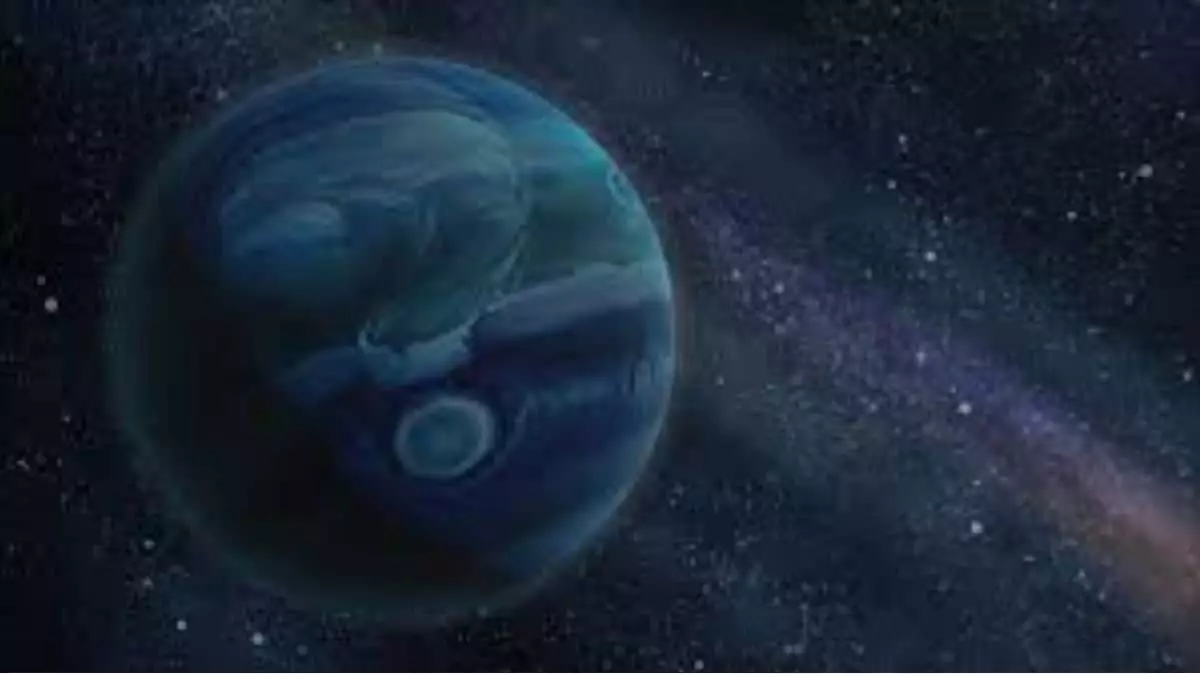
The concept of an elusive, massive planet lurking on the fringes of our solar system has captured imaginations and fueled debates for decades. Initially dubbed “Planet X,” this hypothetical body was proposed to explain irregularities in Uranus’s orbit—an attempt to fill a perceived gap in our celestial understanding. Yet, despite persistent claims and ongoing searches, the idea of a colossal hidden world remains more speculative than substantiated. While scientific curiosity is justified, it is crucial to recognize the weaknesses and biases inherent in clinging to such hypotheses. The allure of saving our incomplete cosmic picture should not override rigorous testing or skepticism, especially when the evidence remains circumstantial at best.
Revisiting Evidence: Are We Witnessing Confirmation Bias?
Proponents of Planet Nine, notably astronomers like Konstantin Batygin and Mike Brown, argue that peculiar orbital patterns of distant Kuiper Belt objects point toward an unseen gravitational giant. However, this connection isn’t as conclusive as it appears. Their interpretations often rely heavily on pattern recognition—an understandable human tendency that can distort scientific judgment. When multiple hypotheses are viable, the temptation is to favor the most sensational or convenient one. Alternative explanations, such as a dense debris ring or even unknown small-scale effects, have not been thoroughly ruled out. The problem lies in the limited data; observations are sparse and subject to selection bias, with only the brightest, most easily detectable objects contributing to the narrative.
The Flawed Foundations and Overhyped Promises
One of the most concerning aspects of the Planet Nine hypothesis is the overconfidence some astronomers place in early evidence. Statements like Brown’s assertion that “there are currently no other explanations” reflect an overreach—an attempt to close off skepticism prematurely. Science is inherently provisional; jumping to conclusions based on incomplete data risks misdirecting resources and fostering a false sense of certainty. Additionally, the complexity of gravitational interactions at such distances makes it difficult to distinguish between true planetary influence and natural orbital evolution. The discovery of objects like 2023 KQ14, with its startlingly elongated orbit, challenges simpler models and suggests that our understanding of the outer solar system is far from settled. Under this cloud of uncertainty, the obsession over a single planet becomes increasingly unwarranted.
The Real Significance of the Search and Our Cosmic Perspective
While yearning for definitive evidence of Planet Nine may seem like a romantic quest, it also exemplifies how human psychology and cultural narratives shape scientific pursuits. The search for a hidden planet risks becoming a distraction from more critical astrophysical questions: understanding the formation of our solar system, studying the diverse population of trans-Neptunian objects, and refining models of planetary dynamics. Moreover, claims of an undiscovered massive planet tend to be hyped, sometimes feeding a sensationalist narrative that underpins public imagination—yet they often lack the rigorous, incremental validation that true scientific progress demands. It behooves us to approach this puzzle with cautious skepticism, balancing curiosity with responsibility in our quest to expand cosmic knowledge.