
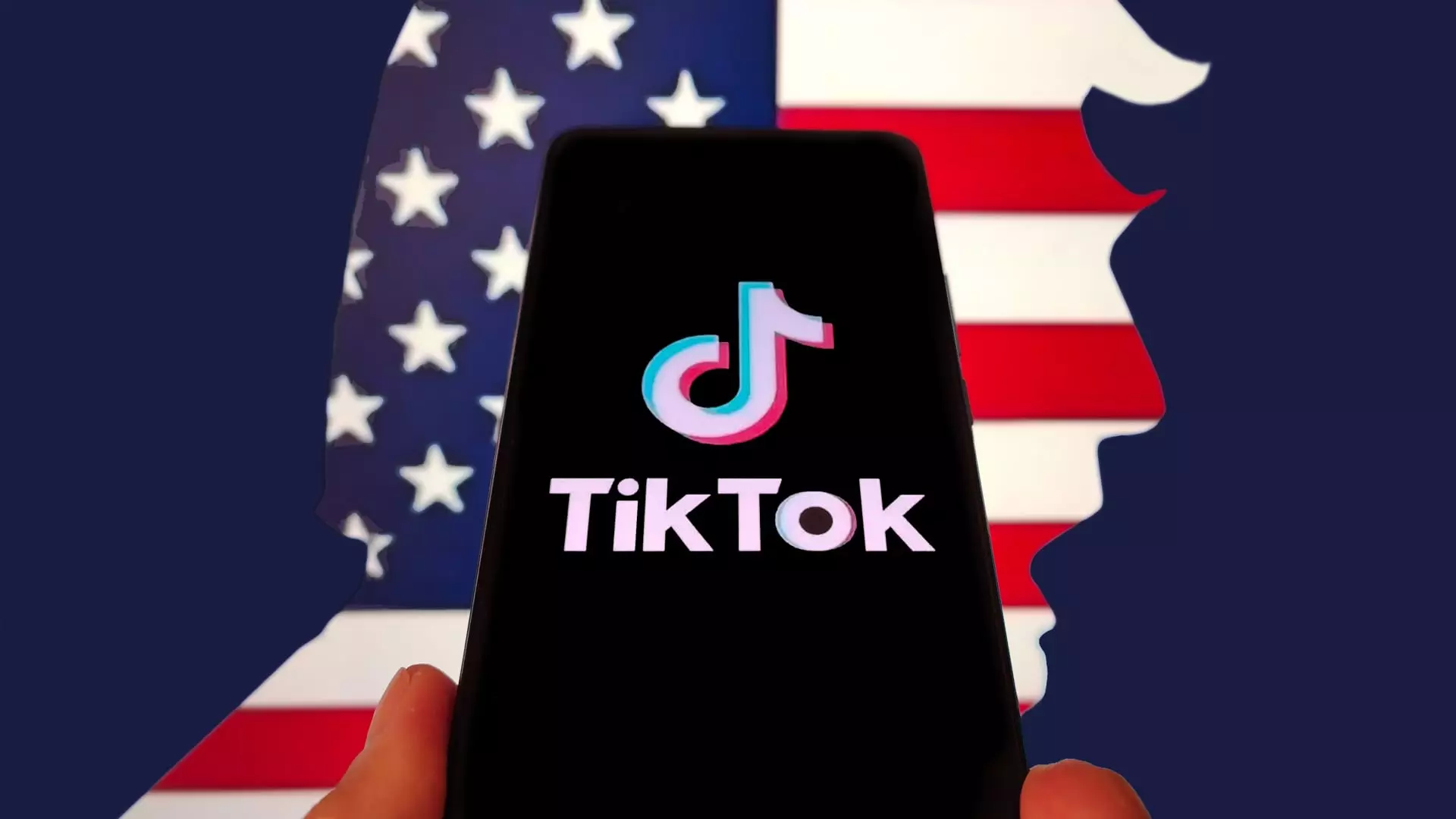
In the whirlwind of negotiations and public statements surrounding the recent TikTok deal, one thing becomes painfully clear: the façade of American control is just that—a façade. While officials trumpet a supposed victory for U.S. sovereignty, closer scrutiny reveals a complex web of concessions that ultimately undermine genuine independence. The six out of seven board seats reserved for Americans and the promise to control the app’s algorithm seem like tangible victories. Yet, they are more symbolic than substantive, designed to placate a skeptical public rather than secure real dominance over a platform that has become an integral part of global digital life. It is a façade crafted to show strength, but behind it lies a recognition of how deeply intertwined TikTok remains with Chinese interests and broader geopolitical power plays.
The negotiation process appears less like a resolute stand for national security and more like a delicate dance to avoid alienating key stakeholders in both countries. U.S. officials frame the deal as “America first,” but it’s difficult to ignore the fact that the core data and infrastructure oversight still depend heavily on corporate actors like Oracle. The promise to control the algorithm—a critical component of content propagation and influence—is no small matter. Yet, the real question lingers: can any algorithm, regardless of legal oversight, act independently of the overarching geopolitical motivations? The investments and boardroom arrangements seem designed to give the illusion of control, while the actual levers of power remain subtly but firmly in the hands of those with Chinese connections or influence.
National Security or a Political Smokescreen?
The push for American ownership of TikTok is driven by genuine concerns about data privacy and potential manipulation by the Chinese government. However, the narrative has often been muddied by political motives. The Trump administration’s overt efforts to restrict or ban TikTok reveal how much of this controversy is entangled with broader cultural and political battles—especially among younger voters. Trump’s vocal enthusiasm for the app, despite his prior hesitations, highlights how political feasibility often outweighs strategic clarity. His acknowledgement that TikTok helped secure votes underscores the politicization of this issue, transforming it into a symbolic battleground rather than a genuine matter of national security.
While claiming victories in negotiations, the reality is that the U.S. has limited authority over the platform’s core operations. By ceding control of the algorithm and structure to a complex consortium of American and Chinese entities, the government is essentially accepting that its ability to regulate or curtail Chinese influence on TikTok remains constrained. This strategic compromise reads not as a decisive victory but as an acknowledgment that in the era of digital diplomacy, control is increasingly illusory. The real challenge is that the public and policymakers alike are too often dazzled by narratives of sovereignty rather than confronting the nuanced realities of global tech influence.
The Illusion of Sovereignty in a Digital Age
The narrative that this deal “puts America first” is largely superficial. In an interconnected digital ecosystem, no country can claim absolute control over a platform like TikTok without surrendering essential parts of its sovereignty. The administration’s framing obscures the larger truth: the platform’s physical and data infrastructure remains a hybrid of American, Chinese, and multinational interests. The promise that the U.S. will control the app’s algorithm and data is more aspirational than actual, especially given how algorithmic influence is inherently opaque and context-dependent.
Moreover, the focus on board memberships and algorithm control diminishes the deeper issue—the structural dependencies that such platforms have developed worldwide. Platforms like TikTok are not just tools but complex ecosystems that reflect and influence societal values, political beliefs, and economic power structures. Simply appointing American board members and promising algorithm oversight does little to address the underlying concerns of data commodification, political manipulation, and the monopolization of information. These are systemic issues that require more than surface-level governance; they demand a rethinking of digital sovereignty itself.
Casting Illusions and Shaping Public Perception
The political narrative surrounding TikTok’s future under American control is carefully curated to foster optimism. Trump’s claims that this deal is a “great victory” for young voters, and his anecdotal reflections on how TikTok helped him politically, are examples of how politicians manipulate digital platforms to serve personal and electoral interests. Such rhetoric simplifies an extraordinarily complex problem into a story of national victory, masking the fact that real influence still resides within the ambiguities of multinational corporate interests and international diplomacy.
Furthermore, the role of big tech corporations in this scenario complicates the public’s understanding of sovereignty. Oracle’s role as the primary steward of data privacy and security demonstrates how corporate interests, rather than government agencies, are central to the governance of such platforms. This shift raises questions about accountability and the true locus of power in a world where corporations often wield influence surpassing that of nation-states. The illusion of American control is thus less about safeguarding national interests and more about managing perceptions in a landscape where control is fluid, contested, and often superficial.
The whole spectacle reveals a broader, unsettling truth: in the digital age, sovereignty is no longer a fixed concept. It is a negotiated, often fragile, construct that can be easily manipulated by strategic interests cloaked in nationalistic rhetoric. The TikTok deal exemplifies this dangerous trend—promising security and control while subtly conceding the most vital aspects of influence to unseen stakeholders. As we continue to navigate this new terrain, it is critical to question whether these deals are genuine assertions of sovereignty or carefully staged illusions meant to satisfy political narratives and corporate interests.