
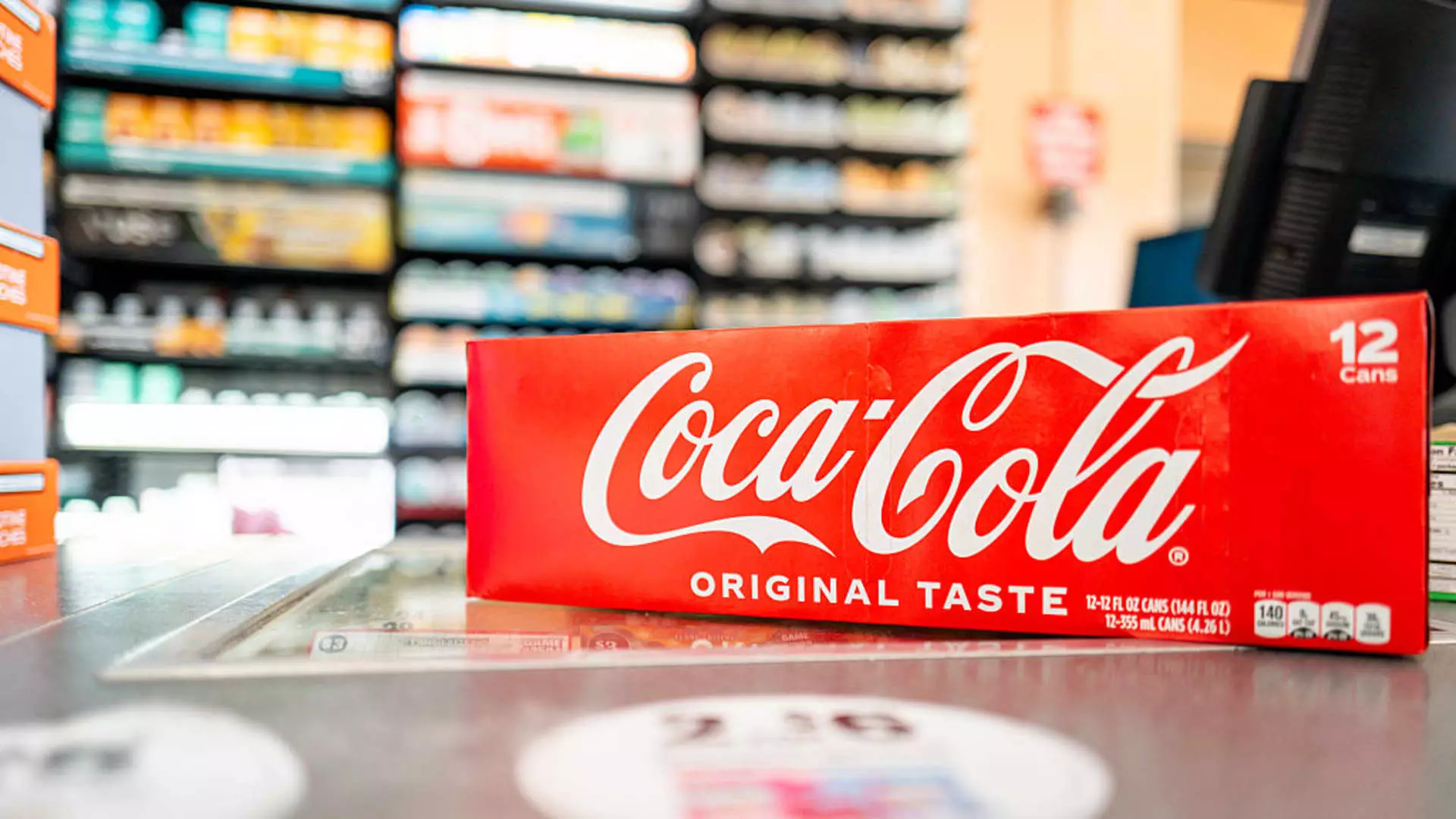
Coca-Cola’s latest quarterly report presents an image of resilience and steady growth, yet beneath this polished façade lie signs of a company grappling with profound challenges. The company’s earnings surpass analyst expectations—an immediate signal of strength. However, a closer look reveals that this victory is not as robust as it appears. A modest 1% increase in revenue and a slight rebound in some markets do little to obscure the unsettling reality: declining volumes across most segments, and a consumer landscape that feels increasingly fragile. The narrative of “beating expectations” becomes less convincing when the core demand for Coca-Cola’s flagship products continues to weaken amid turbulent economic conditions.
Economic Uncertainty Undermines Consumer Confidence###>
The primary driver of Coca-Cola’s mixed performance is the broader economic environment. Constant geopolitical tensions and economic instability in key markets have created an atmosphere of consumer hesitation. While executives claim that existing strategies are “working,” the reality is that consumers are cutting back discretionary spending, especially on non-essential beverages. The slight uptick in sales in some regions does not negate the fact that overall demand remains subdued. It reflects, merely, a temporary stabilization — not a sign of sustainable growth. This fragility exposes how vulnerable even giant corporations like Coca-Cola have become to macroeconomic shocks.
Market Disparities Reveal Deeper Structural Issues###>
One of the most revealing aspects of Coca-Cola’s recent performance is the uneven regional results. North America, traditionally a powerhouse, saw a 1% volume decline, an indication that even mature markets are not immune to demand erosion. Latin America and Asia-Pacific experienced sharper drops of 2-3%, confirming that Coca-Cola’s once-expansive global reach is now constrained by demographic shifts, changing consumer preferences, and political unrest. Meanwhile, the EMEA region showed growth, but this anomaly cannot mask the overall trend. Such discrepancies hint at a corporation that is losing its core advantage—its ability to effortlessly capitalize on emerging markets and maintain consistent growth.
Strategic Shifts Fail to Address Fundamental Weaknesses###>
Coca-Cola’s decision to reintroduce a cane sugar version of its flagship soda in the U.S. exemplifies a reactive strategy rather than a visionary approach. While this move could attract nostalgic consumers or those seeking “premium” options, it does little to tackle the root problem: changing consumer tastes and health consciousness. The decline across segments like juice, dairy, and sports drinks exposes a diversification strategy that is diluting focus rather than strengthening core offerings. The company’s reliance on product tweaks and regional adjustments hints at a failure to innovate fundamentally or adapt to a shifting beverage landscape that increasingly favors health-conscious and sustainable options.
A Company at a Crossroads: Illusions of Confidence or True Transformation?###>
Coca-Cola’s leadership speaks of confidence and resilience, yet their words often clash with the reality of declining volumes. The announced narrowing of earnings outlook and the projected modest 3% growth for the year appear optimistic, not based on actual demand, but on operational efficiencies and cost-cutting. This approach risks masking deeper issues rather than confronting them. For a corporate giant that has dominated the beverage industry for decades, these signals suggest a company in decline—clinging to its brand power while failing to innovate or fundamentally restructure in an era increasingly defined by health-conscious, environmentally aware, and socially responsible consumer demands.
What the Future Holds: An Industry in Transition or a Corporate Stagnation?###>
The beverage sector is transforming rapidly, yet Coca-Cola seems caught in a liminal space—neither embracing the change nor resisting it skillfully enough. The introduction of a cane sugar soda is a small nod to shifting preferences, but the company’s broader strategic posture suggests it is operating on borrowed time. As consumers continue to prioritize health, sustainability, and authenticity, Coca-Cola’s traditional business model may no longer suffice. Without bold innovation or genuine adaptation, the corporation risks becoming a relic of a bygone era, its inflated narrative of success masking a deep-seated vulnerability in an ever-evolving market landscape.