
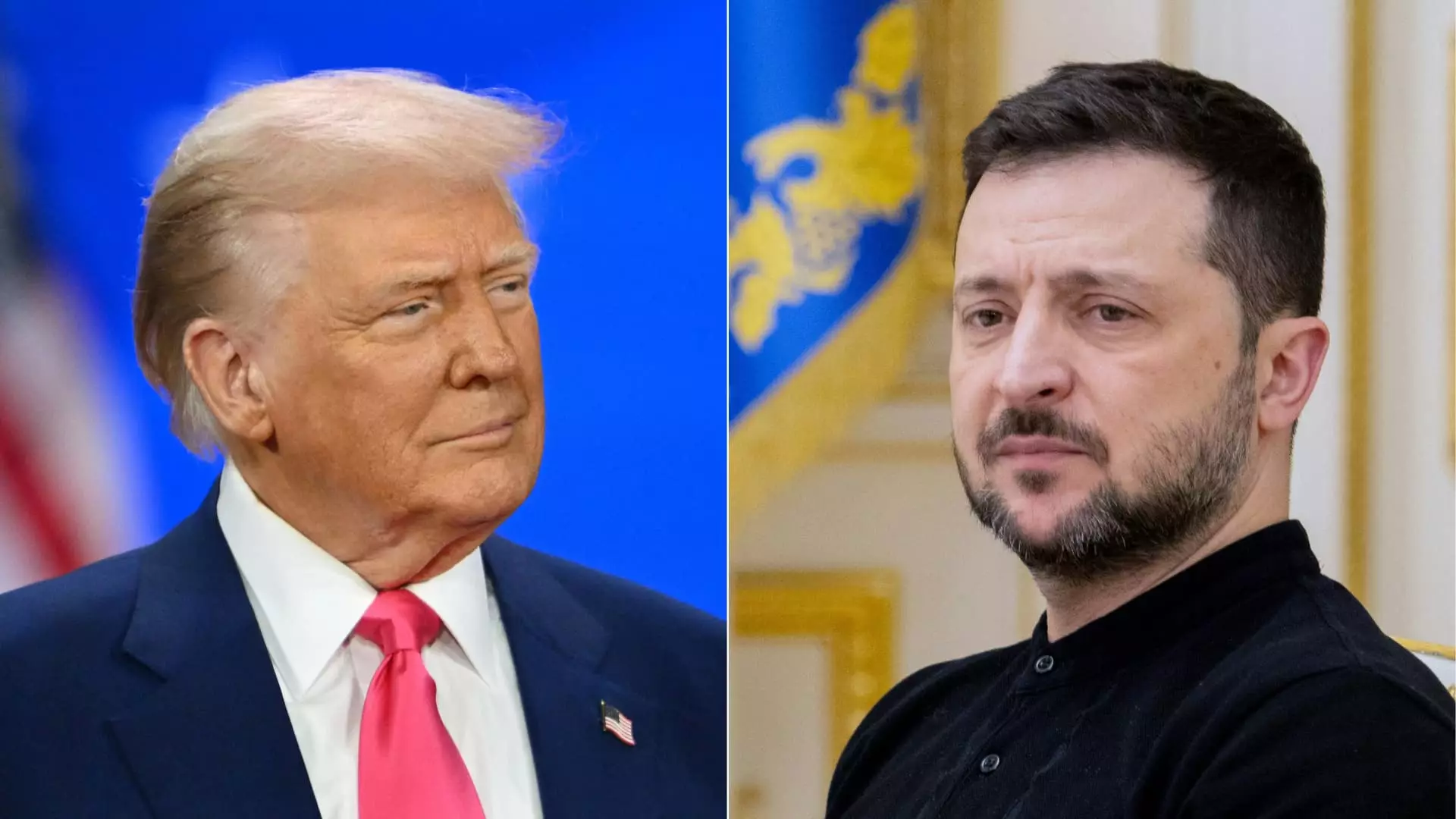
In recent political discourse, there’s a troubling narrative suggesting that Ukraine alone bears the burden of ending its conflict with Russia. Despite the myriad complexities on the ground, some prominent figures, including former President Donald Trump, promote the idea that Kyiv can simply choose to abandon its territorial integrity and strategic positions in exchange for peace. Such rhetoric is deeply misleading and dangerously oversimplifies a conflict rooted in sovereignty, security, and international law. It implicitly suggests that Ukraine’s fight for self-determination is optional, when in reality, capitulation would only embolden authoritarian regimes and set a perilous precedent for future conflicts.
A critical flaw in this line of thinking is the assumption that immediate peace hinges solely on Ukraine’s willingness to compromise. This perspective neglects the broader geopolitical context—namely, Russia’s expansionist ambitions and the West’s role—or lack thereof—in fostering genuine security guarantees for Kyiv. The argument that President Zelenskyy could end the war “almost immediately” by capitulating on key defensive positions dismisses the fact that Ukraine is fighting not just for its land but for its right to exist as a sovereign state. To force Ukraine into conceding territory under threat of continued war or worse, submission, undermines democratic values and international commitments to sovereignty and self-determination.
The Dangerous Equilibrium of Concessions and Conformity
At the heart of proposals to negotiate peace by ceding critical territories lies a troubling acceptance of instability as inevitable or even desirable. Moscow’s demanding of the “root causes”—most notably NATO’s eastward expansion—serves as a blatant attempt to rewrite history and normalize Russia’s aggressive stance. To accept these demands without vehement opposition is to endorse a form of appeasement that rewards the violations of international law committed by Russia since 2014, culminating in its full-scale invasion in 2022.
The strategy of offering Ukraine a deal that involves sacrificing its eastern territories under duress threatens not only Ukraine’s sovereignty but the security architecture of Europe as a whole. The concept of conceding strategic positions to prevent further conflict is fundamentally flawed; it rewards aggression and sends a dangerous message to authoritarian states that territorial conquest can be rewarded, rather than deterred. Such concessions weaken alliances like NATO and diminish the collective security framework that was designed to prevent similar conflicts in the future.
Moreover, the notion that Ukraine should accept terms that strip it of its defensive positions ignores the realities of warfare. Kyiv’s fortified lines in Donetsk serve as essential buffers against further encroachments. Yielding these positions without guarantees would leave Ukraine vulnerable, emboldening Russia to press forward with less resistance and more impunity. This is a high-stakes gamble—one that could ultimately see Ukraine erode into a fragmented, destabilized state, fueling long-term regional instability.
Truth, Justice, and the Necessity of Standing Firm
Given the stakes, anyone who advocates for quick capitulation as a pathway to peace must reckon with the underlying moral imperative: supporting Ukraine’s fight for sovereignty and territorial integrity isn’t just a strategic choice, it’s a moral one. The idea that peace can be achieved at the expense of Ukraine’s national security betrays a fundamental misunderstanding of justice. It disregards the rights of Ukrainians to determine their future and skip past the historical lessons that appeasing aggressors only begets further conflict.
U.S. and European leaders have a moral responsibility to stand firm against pressure to accept territorial losses in exchange for a false promise of peace. Genuine peace comes through diplomatic efforts rooted in fairness, justice, and respect for international law—not through surrender. Any attempt to coerce Ukraine into accepting unfavorable terms under the guise of ending the war risks creating a precedent where power and intimidation override legitimacy and rights.
The path forward must prioritize establishing firm security guarantees for Ukraine, reinforcing its sovereignty, and dissuading future aggressors. Negotiations should not be a vehicle for appeasement but a platform to ensure that Russia’s illegal actions face meaningful consequences. Only by avoiding the seductive allure of quick fixes and recognizing the high moral and strategic costs of capitulation can the international community hope to preserve not just peace, but justice and stability in the long term.