
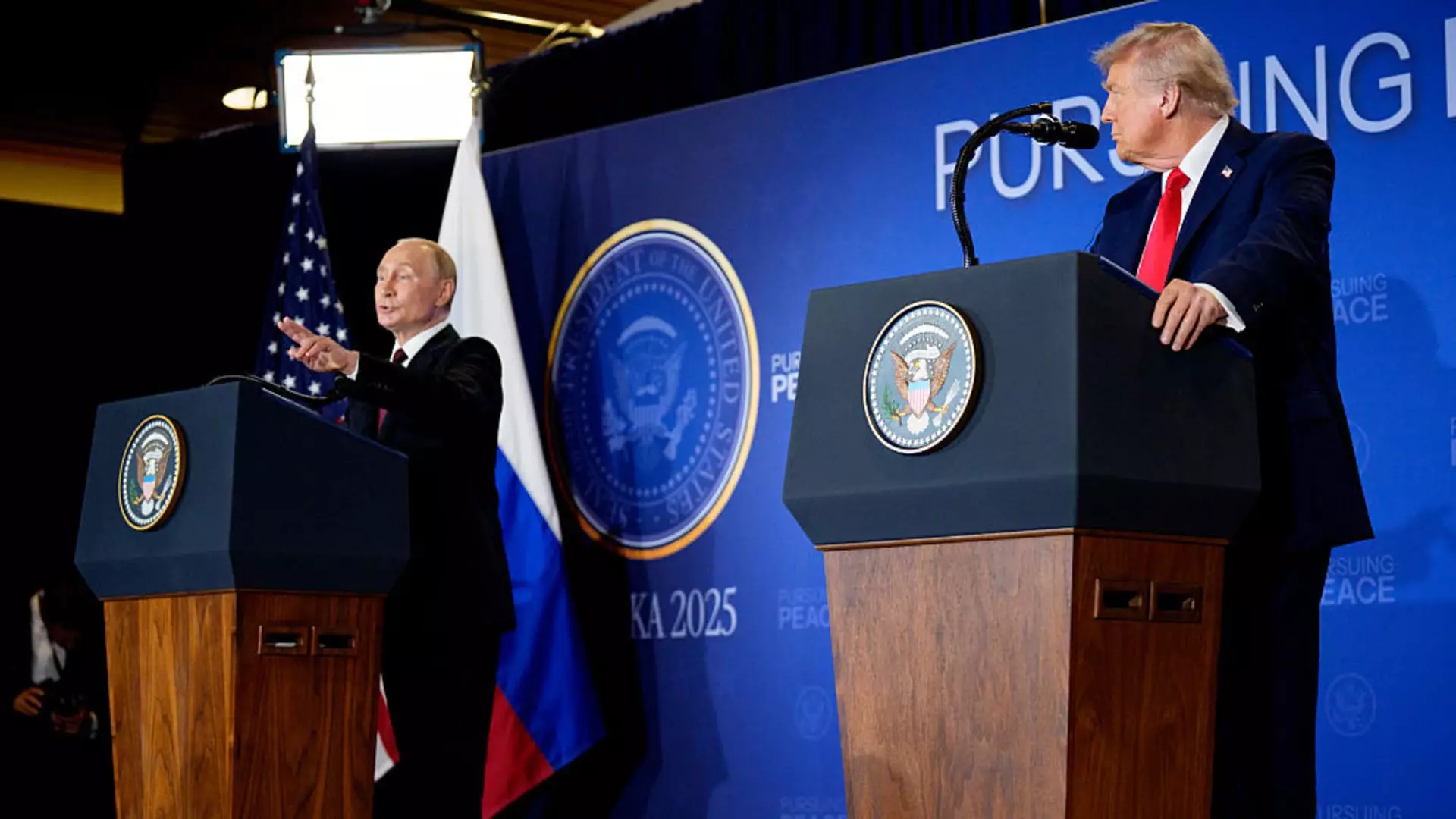
The recent summit between President Donald Trump and Vladimir Putin, hosted in the historically significant yet politically strained setting of Alaska, was hailed by some as a step toward détente. Yet, beneath the surface of this diplomatic veneer lies a stark reality: no genuine breakthroughs emerged. Instead, what we witnessed was a carefully staged performance—an exercise in diplomacy that ultimately failed to address the core issues plaguing U.S.-Russia relations or the ongoing crisis in Ukraine. It is clear that this meeting was less about substantive resolution and more about optics, testing the waters rather than delving into true negotiation.
Throughout the summit, there was an uneasy undercurrent. Trump described the talks as “productive,” but his words ring hollow amidst the absence of concrete agreements and a lack of transparency. The White House’s characterization of the event as “a listening exercise” exemplifies how fleeting and insubstantial these diplomatic efforts can be. If listening was the goal, then it is evident that the listening was selective, preordained to confirm existing narratives rather than foster genuine dialogue. The decision to sideline Ukraine from the discussions exposes a troubling apathy within Western leadership—highlighting how geopolitical expediency often eclipses the pursuit of lasting peace and sovereignty.
The Reality Behind the Rhetoric
President Zelenskyy’s plea for international unity and a tangible peace process seemed to vanish into the background as the summit unfolded. His calls for an inclusive dialogue comprising Ukraine, the U.S., and Russia were met with ambiguous promises and vague commitments. Trump’s assertion that “there are many points that we agreed on” lacks specificity and credibility, revealing how negotiations often become a game of strategic ambiguity rather than transparent problem-solving. The unexplained, often non-committal language from both leaders signifies a lack of genuine intention to resolve the conflict on terms that respect Ukraine’s sovereignty, instead emphasizing a fragile hope that some form of agreement might be reached without addressing fundamental issues.
Putin’s desire to frame this meeting as a “starting point” is a typical diplomatic maneuver—yet historically, such statements have rarely translated into meaningful change. His description of bilateral relations as “the lowest point since the Cold War” underscores the profound mistrust between Moscow and Washington, a mistrust that cannot be bridged by mere summits or superficial gestures. It is disconcerting that both leaders seem content to keep the façade alive, perhaps driven more by domestic political needs or international image-Management than genuine diplomacy aimed at peace.
Power Dynamics & the Illusion of Leverage
Trump’s insinuation that he would coordinate with NATO and Zelenskyy paints a picture of a leader trying to reassure allies while simultaneously engaging in side conversations that appear to undermine those alliances. His hesitant references to “many points agreed upon” and “a very good chance” leave open the question of whether this summit was a prelude to further concessions or simply diplomatic lip service. The fact that Trump is considering updating NATO and Zelenskyy about the talks reflects the precarious balance of power—where diplomacy is often a negotiation of influence rather than genuine conflict resolution.
Moreover, the Russian media’s upbeat portrayal of the summit reveals the strategic weaponization of these talks. State-controlled outlets frame the encounter as a significant victory, reinforcing nationalistic narratives within Russia. Conversely, Ukraine’s somber mood signals a growing concern that diplomatic negotiations may continue to favor Moscow’s interests at the expense of Ukrainian territorial integrity. These divergent perspectives underline the failure of diplomacy to reconcile conflicting national interests, especially when driven by geopolitical posturing rather than sincere efforts toward peace.
The Broader Implication: Diplomacy or Distraction?
What this summit ultimately reveals is a pattern rooted in the superficiality of international diplomacy in an era of rising nationalism and strategic complacency. While leaders claim progress, none appear willing to confront the deeper issues—Ukraine’s sovereignty, nuclear arms control, or systemic mistrust—that fuel this ongoing turbulence. This summit is symptomatic of a larger failure: the inability of Western leadership, in particular, to leverage genuine multilateral diplomacy to effect meaningful change.
Instead, these bilateral summits often serve as distractions, allowing policymakers to paint a veneer of diplomacy while skirted issues remain unresolved at best, ignored at worst. The hope that dialogue alone will foster peace is increasingly naive in a geopolitical climate dominated by power struggles and conflicting national interests. The true challenge lies not in summits or short-term gestures but in a sustained effort to build trust, respect sovereignty, and address the systemic root causes of conflict that Western leaders often dismiss or sideline for tactical gains.
Despite the apparent diplomatic dance, the underlying truth persists: these high-stakes talks are more about maintaining appearances than achieving substantive progress. Power remains concentrated, decision-making opaque, and genuine peace elusive. Until there is an acknowledgment of these failures and a deliberate shift toward authentic, inclusive diplomacy, such summits will continue to be nothing more than fleeting spectacles—costly illusions that distract from the hard work of peace-building.