
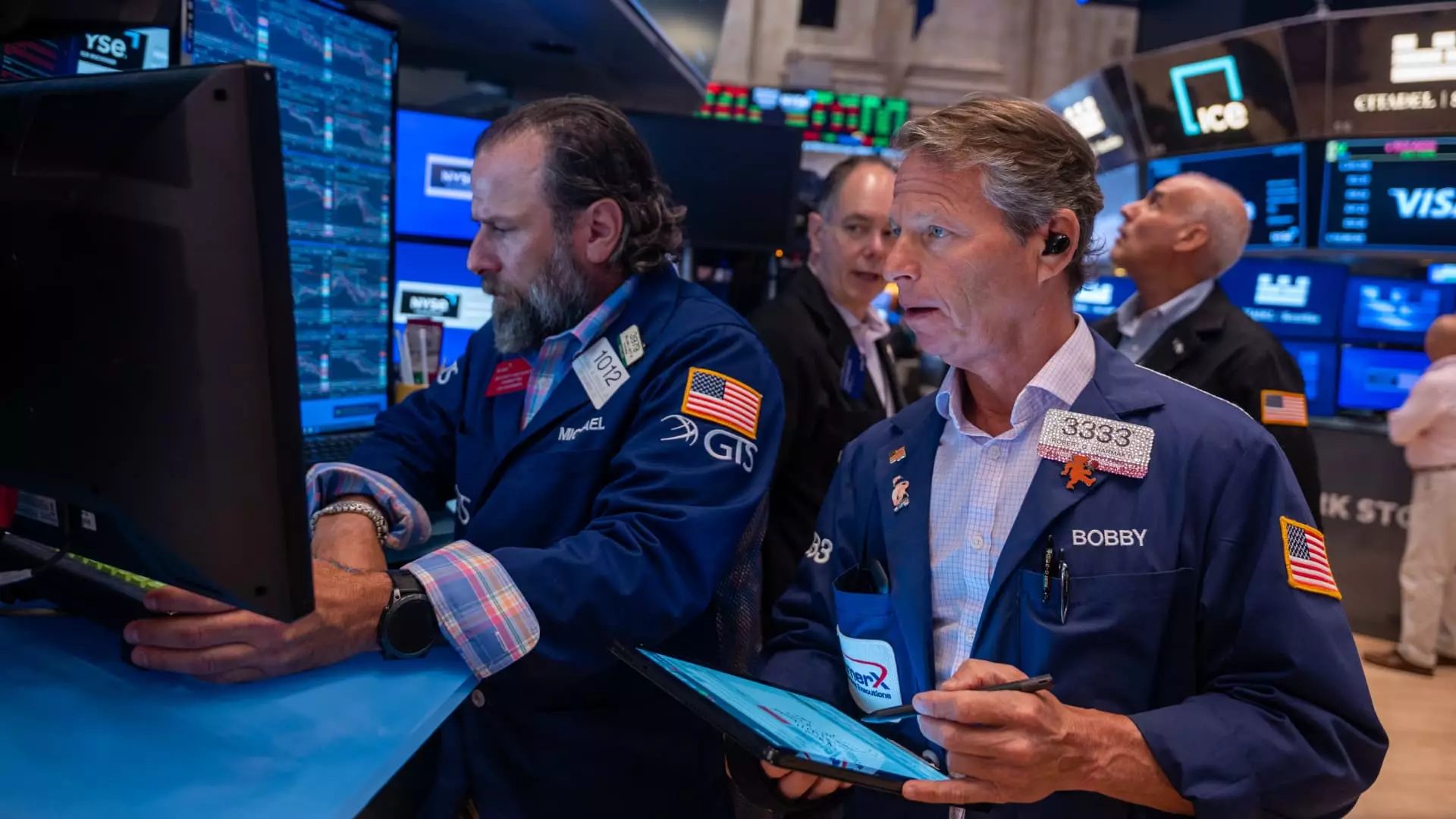
The recent decline in stock markets underscores a sobering reality: despite conversations about resilience and growth, the U.S. economy exhibits troubling signs of fragility. The dismal July jobs report, which showed an increase of only 73,000 jobs—far below expectations—acts as a stark reminder that the labor market is weakening. The revision of previous months’ job figures downward signals a persistent slowdown that cannot be dismissed as temporary noise. This data isn’t merely a number; it is a clarion call that the pillar of American economic strength—the labor market—is under serious stress. The fact that major sectors like banking and manufacturing are experiencing sharp declines adds weight to this narrative, challenging the optimistic narratives pushed by policymakers who insist that the economy is fundamentally sound.
Market Response: Fear and Uncertainty Dominate
Stock markets reflected this pessimism through sharp declines, with the Dow plunging 430 points, the S&P 500 dropping by 1.6%, and the Nasdaq suffering a 2.1% fall. These are not random fluctuations but a direct response to mounting fears about economic growth. Financial institutions such as JPMorgan Chase and Bank of America shed significant value, indicating that fears of reduced loan demand and tighter credit conditions are more than just speculation—they are becoming reality. Investors, often called the market’s late-night philosophers, are signaling that the window for effective intervention is closing. The markets’ sensitivity to interest rate prospects—oscillating between hopes for a rate cut and fears that it’s already too late—illustrate an anxious desperation for stability amid mounting economic turbulences.
Policy and Politics: Tug-of-War in a Dangerous Climate
The geopolitical chess game involving tariffs and trade wars injected an additional layer of volatility into markets. President Trump’s surprise tariff hikes, especially against key allies like Canada, threaten to choke global supply chains and further slow economic momentum. The tariffs’ escalation—ranging up to 41%—along with the retaliatory measures and transshipment strategies, present a tangled web of protectionism that hampers growth prospects. For investors hoping for immediate relief from monetary policy, the seemingly indecisive stance of the Federal Reserve is a source of frustration. While some interpret the recent economic signals as justifying a rate cut in September, others argue it’s already too late. The conflicting signals from Fed officials and market participants reflect a deeper uncertainty about the resilience of U.S. growth and the effectiveness of policy tools.
Market Dynamics: Responses Are Both Rational and Desperate
Despite the gloomy outlook, there are moments of technical strength and corporate resilience. Apple’s earnings beat, which led to a 2% increase in its stock price, reminds us that some sectors are still standing strong. Conversely, Amazon’s more than 7% decline after soft profit guidance shows how sensitive investor sentiment is to future outlooks—a clear indication that confidence is fragile. The market’s inability to sustain rallies, despite some positive earnings reports, illustrates that underlying fears take precedence. The resilient tech giants temporarily lifted hopes, but the broader picture remains bleak. The divergence between individual company performance and overall market sentiment reveals a disconnect—a market that is largely driven by fear, not fundamentals.
What this market turmoil exposes is not merely economic weakness but a systemic vulnerability rooted in the conflation of short-term chaos and long-term structural issues. It calls for a reassessment of our reliance on monetary policy as a quick fix and a recognition that trade conflicts and labor market woes require bolder, more sustainable solutions. The market’s reaction is a mirror—not just of current conditions but of a broader societal reluctance to confront complex, ingrained problems. If policymakers and investors fail to listen to this warning, the coming months may prove even more turbulent, forcing us to reckon with the reality that quick fixes and complacency are not enough to maintain a resilient economy.