
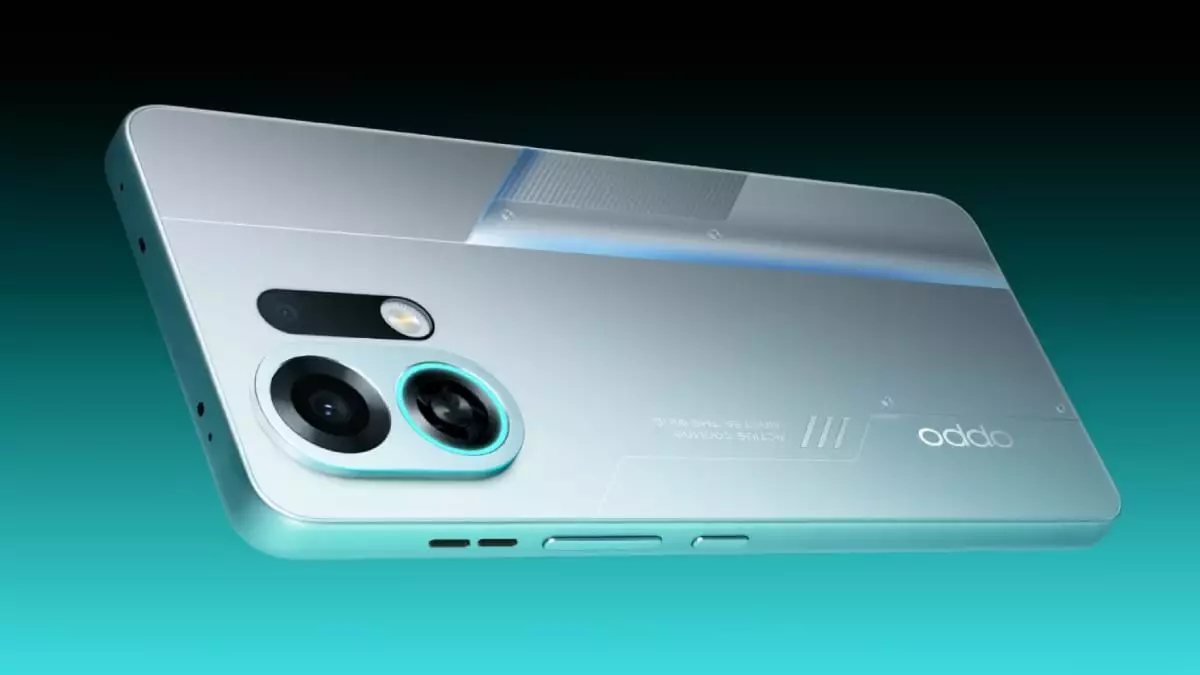
The upcoming Oppo K13 Turbo series appears to embody the perennial tech industry trend of loading smartphones with over-the-top specifications, often at the expense of real user needs. While manufacturers continuously promise innovation, this frantic race to include the most advanced processors, cooling systems, and AI capabilities often results in devices that seem more like engineering experiments than practical tools. The K13 Turbo series, with its bold claims, epitomizes this trend—offering features that sound impressive but may overshadow their actual utility to the average consumer.
The inclusion of active cooling solutions like centrifugal fans is a striking example of technological overreach. While thermal management is essential, integrating moving parts into smartphones raises questions about durability, noise, and long-term reliability. Such a feature seems more suited to high-performance gaming laptops than daily-use phones. Instead of focusing on optimizing core user experiences—battery life, camera quality, or user-friendly design—Oppo appears fixated on showcasing technical prowess that many users won’t even notice in everyday scenarios.
Moreover, Oppo’s emphasis on AI-backed features like scene optimization and real-time voice recognition, though marketed as revolutionary, suggest a lack of confidence in creating genuinely meaningful innovations. These features, while neat on paper, often fall flat in real-world usage, becoming gimmicks rather than game-changers. It’s indicative of a broader industry tendency to mask mediocre hardware with AI smokescreens, distracting consumers from the core shortcomings of devices.
Questionable Priorities and the Illusion of Progress
Furthermore, the aggressive promotion of the Snapdragon 8s Gen 4 and MediaTek Dimensity 8450 chipsets might seem impressive initially, but the truth lies in whether these advancements translate into a better everyday experience. It’s worth scrutinizing whether such high-powered processors are truly necessary for typical users or if they serve only to boost benchmark scores and marketing narratives. The claims of performance improvements—like 31% faster CPU and 49% better GPU performance—are impressive in a technical sense, but often these gains are marginal for most consumers. In the real world, many users are more concerned with battery longevity, camera quality, or software updates than raw processing power.
Additionally, the touted AI features—text summarization, scene optimization, smart suggestions—are essentially personalization and automation tools that, despite their trendy appeal, can be intrusive or unwieldy. The reliance on AI sometimes raises privacy concerns, especially given that such features often require constant data collection. Instead of empowering users, these features can subtly erode privacy boundaries under the guise of convenience.
Pricing remains a critical yet ambiguous aspect. Although Oppo hints at a sub-Rs. 40,000 price point, the series’ high-end features suggest an inflated value proposition. Consumers deserve transparency—are these devices priced competitively or are they riding the hype wave of cutting-edge tech? The fact that Flipkart has dedicated a microsite indicates a strategic push for mass-market appeal, but whether the average buyer gains genuine value from the series is questionable.
Are These Features Truly Beneficial or Just Technological Showboating?
It’s hypocritical to praise technological progress while simultaneously questioning its relevance. The Oppo K13 Turbo series seems to aggressively chase every latest trend—cooling solutions, AI enhancements, fast charging, and ultra-fast connectivity like Wi-Fi 7 and Bluetooth 6.0—yet many of these boastings are more about keeping pace with competitors than delivering tangible benefits. For instance, active cooling systems are innovative but come with durability trade-offs and increased manufacturing complexity, which could compromise the device’s longevity.
Furthermore, the focus on hyper-performance chips and AI capabilities might alienate the core demographic that values simplicity and reliability. Not everyone needs a phone capable of handling intensive gaming or AI-powered features. For most users, a smartphone is a means of communication, social media, and photography, not a miniature supercomputer.
From a broader perspective, Oppo’s strategy appears to prioritize technological spectacle over user-centric design. Such an approach runs the risk of alienating consumers who seek devices that genuinely improve daily life rather than impress in specs sheets. While pushing boundaries is commendable, it’s crucial that innovation remains grounded in practicality, ensuring that new features enhance the user experience rather than complicate or complicate it.
The real question is whether consumers will truly benefit from the Oppo K13 Turbo series or whether it will become yet another example of a device oversold with cutting-edge features that most users will never fully utilize. In the race for technological supremacy, Oppo might have sacrificed genuine usability for showy specs that carry little long-term value.