
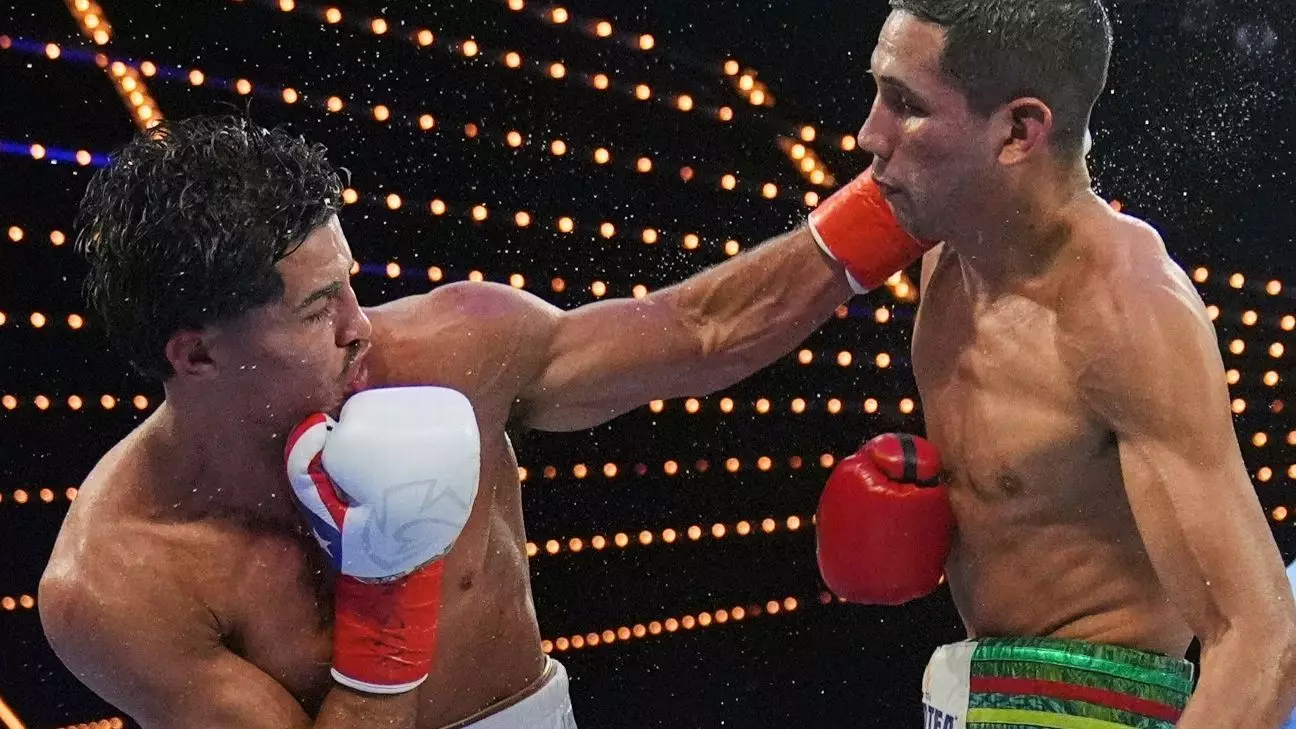
Xander Zayas’ recent victory at Madison Square Garden is more than just a personal accomplishment; it signals a pivotal moment for Puerto Rican boxing. At only 22, Zayas has shattered the mold of traditional boxing legends and embraced a new narrative—one of youthful dominance and strategic finesse. His clinching of the WBO junior middleweight title positions him as a symbol of hope and pride, yet it also prompts a more critical reflection on what this elevation truly means for the sport and the island’s broader identity.
Puerto Rican fighters have historically fought tooth and nail against adversity, often embodying resilience and unyielding spirit. Zayas, with his slick footwork and calculated approach, represents a departure from the raw, brawling style that once defined the island’s boxing ethos. While fans may celebrate his technical mastery, there’s an undercurrent of concern: are we witnessing a shift towards a sanitized, commercially optimized version of boxing that risks diluting the raw passion that once made Puerto Rican fighters legends?
This victory at Madison Square Garden—an iconic venue—reinforces the complex relationship between cultural pride and modern commercialization. Zayas’ success is celebrated unambiguously, yet it raises questions about whether the sport is losing its gritty, authentic roots in pursuit of global markets and spectacle. His age and rapid rise may inspire the youth, but are they also setting the stage for a manufactured version of boxing that prioritizes marketability over character and grit?
Reevaluating the Legacy: Who Truly Benefits From These Triumphs?
While Zayas’ win fuels national pride, it’s essential to scrutinize who truly benefits from this victory. Does it empower the broader Puerto Rican community, or does it serve the interests of promoters and media looking for the next global star? The narrative is often simplified as one of national triumph, but underlying it are subtle economic and political currents that influence which fighters get highlighted and which stories remain unspoken.
The fight’s strategic elegance reveals something about the direction boxing is heading—less about endurance and more about precision and spectacle. This isn’t inherently negative, but there is a danger of elevating fighters who excel in controlled, technically perfect bouts at the expense of those willing to showcase more raw, unrefined grit. The image of Zayas dancing around opponents, sticking to a calculated game plan, could inadvertently promote a version of boxing that prioritizes aesthetics over authenticity—something that the sport’s passionate core might find troubling.
Furthermore, Zayas’ victory at a venue like Madison Square Garden underscores an urban, cosmopolitan appeal that might overshadow visceral, community-based boxing rooted in local barrios. The fight’s commercial success risks creating a narrative of individual heroism while neglecting the collective struggles and histories that have shaped Puerto Rican boxing culture. Without critical reflection, the focus shifts from collective pride to individual notoriety, further complicating how we interpret success on the global stage.
The Future Landscape: New Champions or Echoes of the Past?
Looking ahead, Zayas’ ascendancy might be viewed as a harbinger of change—an evolution that blends skill with spectacle, intended to appeal to a wider audience. However, this evolution must be scrutinized; it’s not necessarily an unequivocal step forward. As other fighters follow, will the sport maintain its gritty essence, or will it gradually morph into a game driven predominantly by technical precision and marketability?
The rise of fighters like Bruce Carrington and Emilio Vargas adds layers to this narrative. Carrington’s mastery and Vargas’ knockout streak represent different facets of the sport’s ongoing transformation. Yet, they also serve as a reminder that the real challenge lies in balancing market-driven success with the authentic grit that historically defined Puerto Rican boxing.
Is this new generation paving the way for a more inclusive, dynamic future—a true reflection of the island’s diverse cultural tapestry? Or are they simply the beneficiaries of a sport that is increasingly craving spectacle over substance? These questions remain unanswered, but they are vital if Puerto Rican boxing is to maintain its soul amid the temptations of globalization.
As we witness this moment of triumph, it’s worth debating whether the sport is advancing into a new era that respects tradition while innovating—or if we’re merely witnessing a polished veneer that conceals deeper debates about authenticity, identity, and cultural pride. Ultimately, the elevation of fighters like Zayas offers hope but also demands a critical eye—questioning whether these victories serve to uplift communities or merely the interests of a globalized boxing industry.