
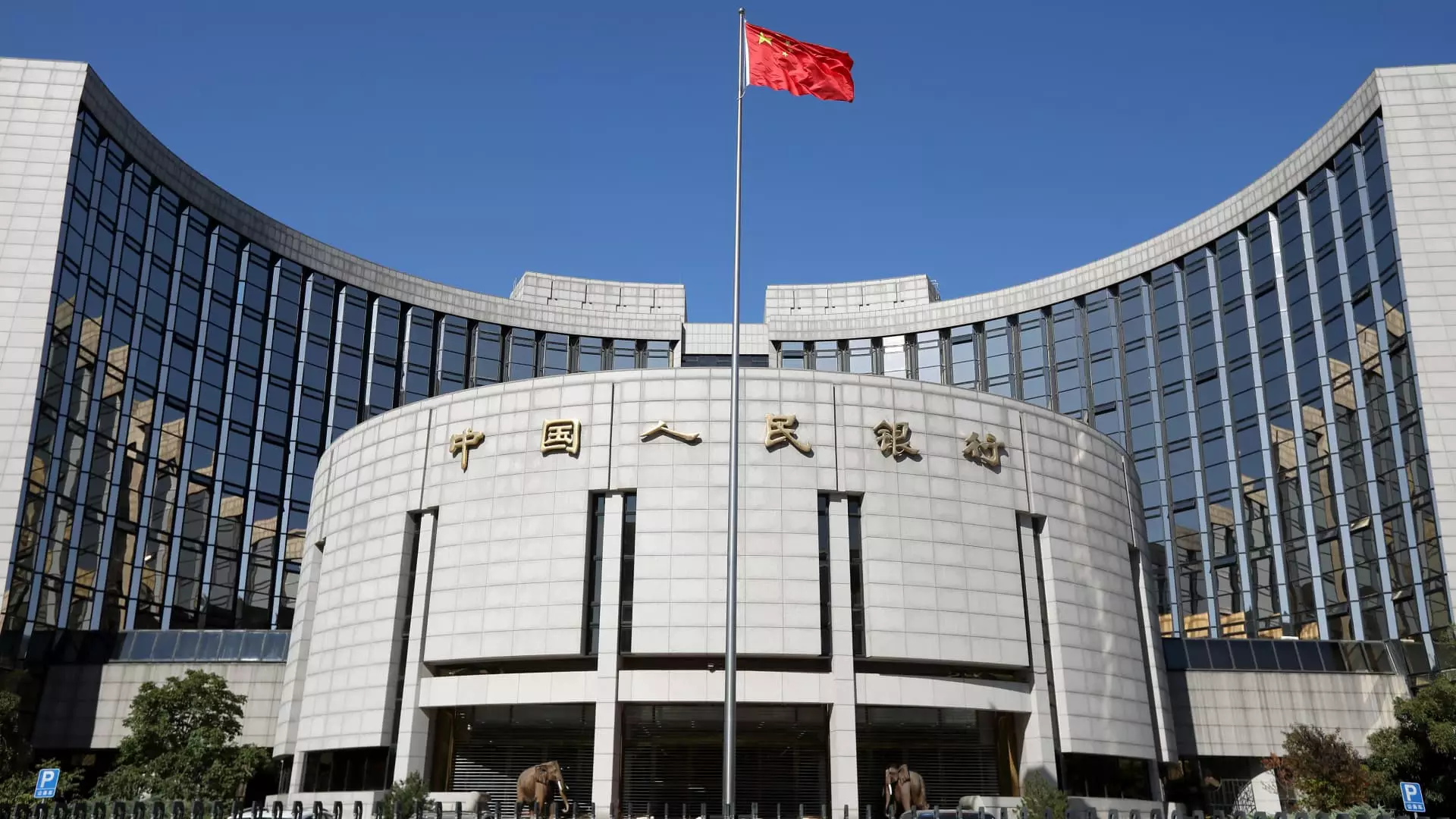
China’s decision to keep its benchmark lending rates unchanged for the fourth consecutive month signals a cautious approach, yet it masks underlying vulnerabilities. While stability may appear reassuring on the surface, it effectively postpones necessary corrective measures amidst a slowing economy. The People’s Bank of China’s reluctance to loosen monetary policy, even after the U.S. Federal Reserve cut interest rates last week, suggests a hesitancy rooted in fear of exacerbating financial risks or inflating a fragile real estate and debt bubble. This inaction risks leaving deeper issues unaddressed, undermining China’s broader economic resilience.
Economic Data: The Harsh Reality
Recent economic indicators paint a bleak picture. Retail sales have slowed significantly to just 3.4%, reflecting waning domestic consumption—a critical engine for growth. Industrial output growth dipping to 5.2% exposes the fragility of manufacturing sectors, while persistent deflation persists in both consumer and wholesale prices. Such symptoms of economic fatigue underscore a fundamental challenge: consumer and business confidence remain subdued, and the government’s familiar response—status quo—may be insufficient to stimulate genuine recovery. Export growth, a vital source of revenue, slowed to a meager 4.4%, marred by waning external demand and complex consequences from U.S. trade policies.
Inaction Could Worsen the Crisis
By choosing not to cut rates or introduce bold stimulus measures, Beijing risks deepening the economic malaise. This passivity seems rooted in a misguided attempt to avoid the pitfalls of excessive debt accumulation associated with previous stimulus efforts, yet it effectively delays the adaptation and restructuring that China desperately needs. The markets responded cautiously, with the CSI 300 index barely holding its gains, while the offshore yuan’s slight appreciation fails to mask investor concerns over growth prospects. The hesitance may reflect a broader strategic dilemma: balancing short-term stability against long-term sustainability.
Marginal Easing and the Uncertain Future
While expectations are growing that China will introduce marginal monetary easing later this year, such measures might be incremental and inadequate. Policymakers appear increasingly aware that superficial adjustments cannot reverse deep-seated structural issues. There is a pressing need for a more comprehensive approach—focused on fostering innovation, reducing inefficient investments, and addressing structural debt challenges—rather than relying on traditional rate cuts alone. Failure to do so risks leaving China on a perilously slippery slope, where temporary fixes only deepen the economic wounds, making recovery more arduous in the long run.