
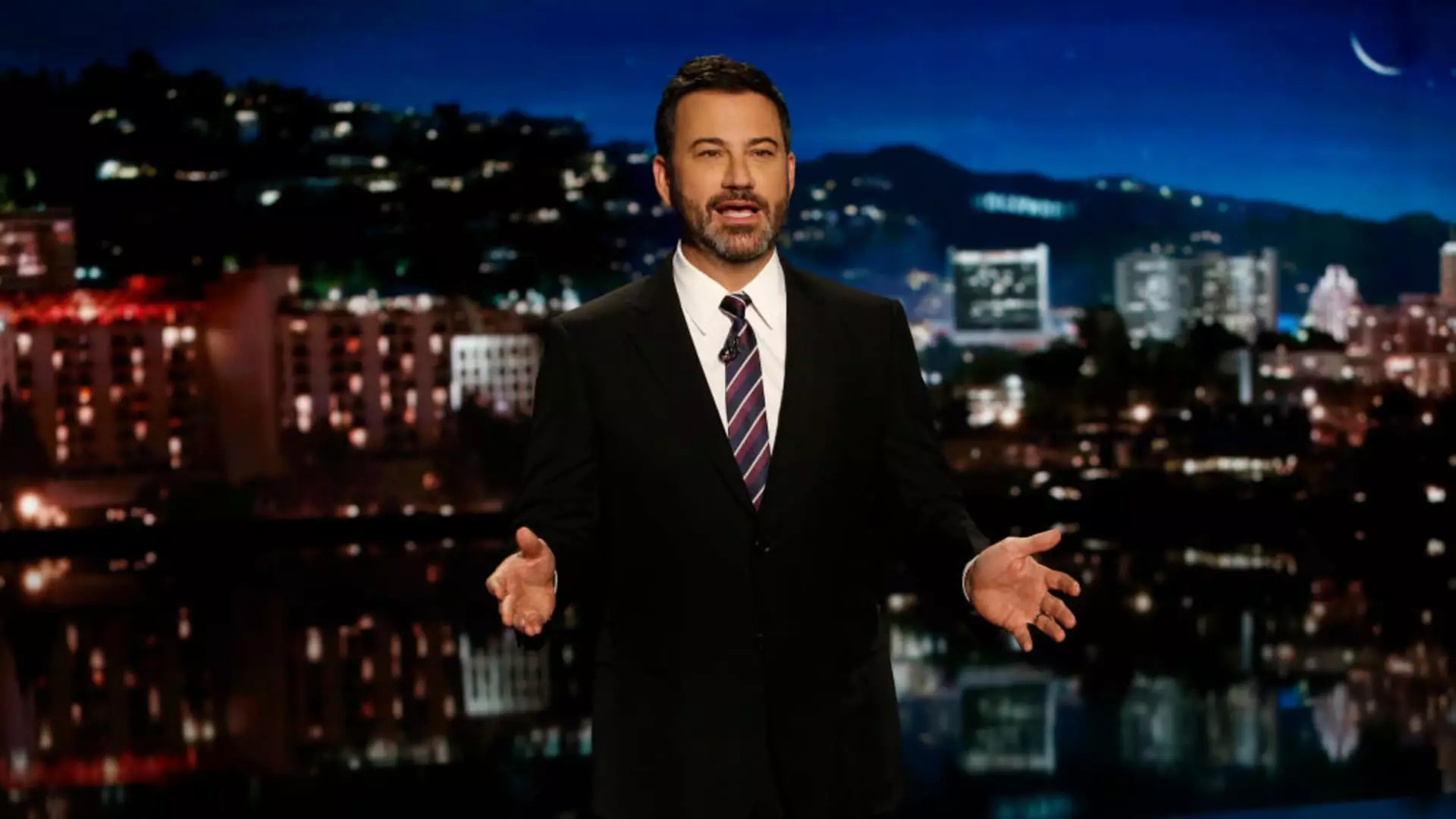
In a climate increasingly dominated by political correctness and corporate interests, the fate of Jimmy Kimmel’s show illuminates a dangerous trend that threatens the core of free expression. The suspension of “Jimmy Kimmel Live!” following controversial remarks underscores how delicate the relationship between comedy, politics, and media regulation has become. While some may cheer for posturing against what they perceive as reckless speech, the broader consequence is a creeping erosion of open dialogue—a trend that could destabilize democratic values in our society.
Kimmel’s comments, which linked the murder of Charlie Kirk’s “alleged killer” to the MAGA movement, sparked immediate outrage from conservative factions and FCC officials. The swift suspension and the subsequent decision by local affiliates to preempt his show represent more than just a punishment—they highlight a disturbing willingness among corporate and political entities to silence voices that challenge prevailing narratives. This episode reveals a frightening dynamic: the line between accountability and censorship is blurring, and the repercussions extend beyond the entertainment industry into the essence of civic discourse.
What makes this situation particularly unsettling is the disproportionate power wielded by regulators and corporate conglomerates that prioritize political interests over safeguarding fundamental rights. The invocation of potential license withdrawals by FCC Chairman Brendan Carr echoes authoritarian tendencies rather than a commitment to journalistic independence. Such threats chill free speech, especially when they target comedians and entertainers whose role has historically been to question authority and provoke thought.
The reaction from media giants like Nexstar and Sinclair further complicates the picture. Their immediate action to pull Kimmel’s show—without a clear, transparent process—raises serious questions about media independence. Are these corporate actors responding to political pressure or genuinely defending moral standards? The answer appears to be a hybrid, with economic interests and political alignment influencing their decisions more than any principled stance on free speech. This worrisome pattern diminishes the diversity of opinions and feeds into a growing atmosphere of self-censorship.
The Political Power Play and Its Impact on Society
The controversy surrounding Kimmel’s remarks isn’t merely about a joke gone awry; it exposes the subtle but pernicious influence of political agendas on cultural institutions. The narrative presented by conservative media and politicians framing Kimmel’s comments as dangerous misinformation feeds into a broader campaign to delegitimize dissenting voices. The suggestion that a comedian should face license revocation for making a provocative joke underscores a troubling trend: the conflation of political disagreement with criminality or factual misinformation.
Moreover, the response from prominent figures across the political spectrum reveals the fractured state of American public discourse. While Republicans like Ted Cruz openly compare regulatory threats to mafia tactics, liberals like Alexandria Ocasio-Cortez condemn the suppression, emphasizing the importance of defending free expression. This ideological divide complicates efforts to establish a consensus on accountability, highlighting how partisan interests often overshadow shared democratic principles. What remains clear is that censorship, whether rooted in conservative or liberal impulses, undermines the fabric of a free society.
A particularly disconcerting aspect of this episode is the palpable mobilization of grassroots protests, both supporting and opposing Kimmel. The protests in Burbank, with people demanding the protection of free speech, reflect a society grappling with its values amidst an increasingly polarized environment. At the same time, threats and acts of violence, like the shooting at an ABC affiliate, add a troubling dimension to the debate. Violence by disgruntled individuals emphasizes how fragile civil discourse has become and the potential for extremist reactions when social tensions run high.
This evolving landscape calls into question the role of media as a watchdog versus the influence of political and economic powers seeking to control the narrative. The question becomes: Are we witnessing the death of a robust, open marketplace of ideas, or are we only observing the self-preservation of certain interests cloaked as moral guardianship? The truth likely lies somewhere in between, but what remains undeniable is the danger posed when those in power wield their influence not to protect democracy but to diminish dissent.
The Center-Left Dilemma: Navigating Free Speech and Responsibility
From a center-wing liberal perspective, the issue transcends partisan battles—it touches on essential democratic values that require balance and nuance. While it is understandable that certain speech, especially if it incites violence or spreads misinformation, warrants scrutiny, the solution should not be censorship or threats of license revocation. Instead, it calls for a more mature societal framework that champions accountability without silencing voices.
The response should be rooted in defending the principles enshrined in free speech, ensuring that comedy, satire, and dissent remain vital components of public life. At the same time, there must be acknowledgment of the social responsibility that accompanies such freedom. Emphasizing dialogue, education, and appropriate context over suppression fosters a healthier democratic environment. Censorship, especially when wielded swiftly and without transparency, risks establishing dangerous precedents that could be exploited for political gain.
This episode with Kimmel should serve as a wake-up call: if we allow corporations and government regulators to define what is acceptable or not based on shifting political winds, we are dismantling the foundations of open society. Genuine progress requires defending the space where uncomfortable truths and provocative ideas can coexist, challenge our assumptions, and ultimately strengthen democratic resilience.
In the end, the battle over Kimmel’s show is more than a dispute over a joke; it is a reflection of how fragile the boundaries of free speech are in a polarized and increasingly corporatized media landscape. The choices we make today about how we respond will shape the fabric of our democracy tomorrow—either as a resilient forum for diverse voices or a fragile echo chamber silenced by fear and censorship.