
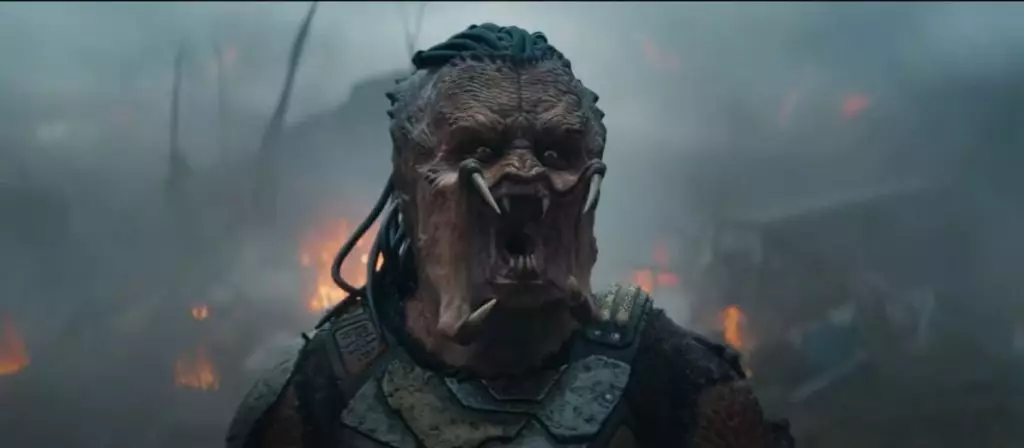
The latest installment in the Predator universe, *Predator: Badlands*, promises to shake up a once-iconic franchise, but a critical eye reveals that this shift may do more harm than good. Instead of embracing its dark, visceral roots, the film seems eager to dilute the menace of the Predator, transforming it into a sympathetic outsider rather than a ruthless hunter. This attempt at nuance, while commendable on paper, risks undermining the core appeal that made the original films so captivating: the raw thrill of survival against a no-nonsense extraterrestrial predator. When you strip away that primal fear and replace it with overly complex backstories or false emotional depth, you threaten the franchise’s integrity and its visceral appeal.
This new direction seems to prioritize social commentary over straightforward horror or action, a trend increasingly prevalent in modern Hollywood. Instead of simply showcasing the Predator as an unstoppable force of nature, filmmakers are planting the seed of empathy for the monster, hinting at misunderstood outcasts and fractured allegiances. The problem with this approach is that it often results in a diluted narrative that balances moral ambiguity with a lack of tension. If the predator becomes more humanized or pitiable, viewers may lose the sense of danger that originally captivated audiences. The franchise’s identity as a brutal, thrilling hunt suffers when the Predator’s primal nature is softened.
Furthermore, the introduction of a Predator protagonist—out of order and with questionable narrative motivation—appears to be an ill-conceived departure from the franchise’s tried-and-true formula. Instead of focusing on the hunt and humanity’s struggle for survival, the film seems intent on exploring relationships and emotional bonds. While these elements can enrich a story, they should never replace the core adrenaline that fans crave. If the creature’s menace is compromised, the film risks becoming a conventional buddy film rather than the visceral space-opera horror it once was.
The Human Elements and Their Impact on the Franchise
The casting choices and character development present another layer of concern. Elle Fanning’s roles in *Badlands* involve complex characters—an android and her various parts—but this added layer of artificial ambiguity appears to distract more than enrich the narrative. The idea of giving human characters extensive emotional arcs within a story that should celebrate primal chaos is inherently problematic. It suggests a desire to appeal to broader audiences while losing sight of the core audience’s expectations: tense, unrelenting action rooted in pure instinct and survival.
Moreover, the narrative’s focus on familial conflicts, such as the duel between brothers and their father’s disdain, sidesteps the universal themes of the original *Predator*—survival, fear, and the unknown. Instead, it becomes mired in familial drama that might appeal to a niche audience but risks alienating those craving a straightforward monster hunt. Narratives about outcast predators and human family dynamics seem to be a misguided effort to humanize the unstoppable force, but in doing so, they risk turning the predator into a sympathetic character rather than a relentless hunter.
The film’s setting on a barren desert-like planet and the use of practical effects are nods to nostalgia, but nostalgia alone cannot salvage a weak storyline. Instead, it highlights how much the franchise relies on visual spectacle to distract from storytelling deficiencies. If the core narrative is flawed, even impressive practical effects fall flat, leaving the audience with hollow spectacle instead of compelling horror or action.
Is This Franchise Evolution or Slow Decay?
The decision to release *Predator: Badlands* exclusively in theaters suggests an ambition to return to the roots of big-screen suspense and visceral thrills. However, the execution appears to be more reactive than revolutionary. It shows a franchise scrambling to reinvent itself, but in doing so, it risks losing what made it special.
Rather than pushing forward with innovation that respects both the franchise’s legacy and modern sensibilities, there’s a tendency to chase fleeting trends—like emotional depth and social relevance—at the expense of the core survival instinct that made Predator films terrifying. When franchises stray too far from their foundation—especially when they abandon their instinctive, predatory DNA—they tend to devolve into superficial nostalgia rather than meaningful evolution.
Ultimately, the new Predator project exemplifies Hollywood’s ongoing struggle to balance spectacle with substance. While ambition is commendable, it must not come at the expense of what made these stories resonate in the first place: primal fear, relentless pursuit, and the terrifying notion that some predators are best left unhumanized. Without a careful recalibration, *Predator: Badlands* risks becoming yet another missed opportunity—an unwelcome detour into safe storytelling rather than a bold reimagining the franchise desperately needs.