
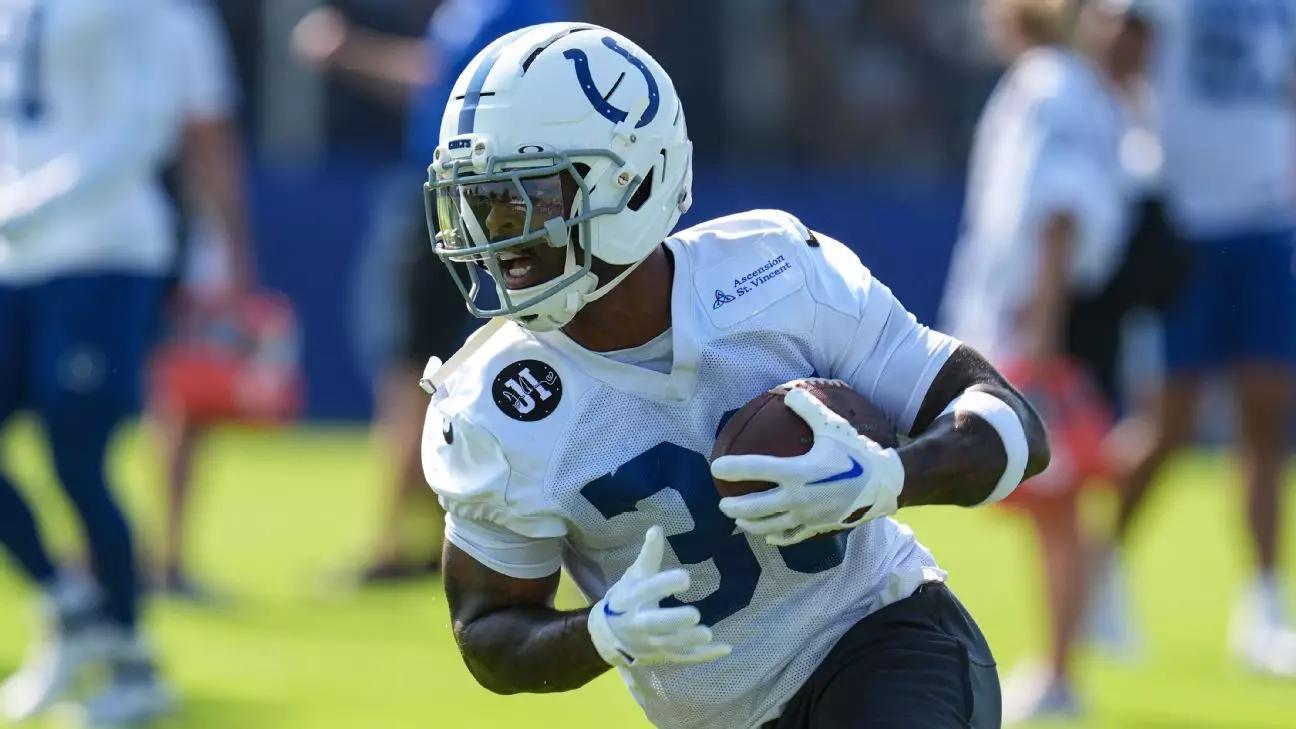
Football, often glorified as America’s sport of resilience and grit, remains inherently perilous, especially when it veers into the dangerous territory of live tackling during training sessions. The recent injury sustained by Indianapolis Colts veteran Salvon Ahmed starkly highlights a troubling trend: teams pushing the limits of safety in pursuit of physical edge and team toughness. While some coaches see intense practices as vital to develop grit, it’s an approach that dangerously underestimates the long-term human costs. The fact that Ahmed’s injury came during a “live” period, sanctioned by the coaching staff, underscores a systemic issue — the willingness to gamble with players’ health in the name of ultimate competitiveness.
The allure of authenticity and readiness often drives teams to include high-risk drills in practice. However, this philosophy ignores critical safety considerations. Removing the padding from training simply because it might hamper “toughness” neglects the human toll, often resulting in severe injuries that could have been prevented. The football culture, at times, romanticizes the brutal aesthetic of smash-mouth play, but this obsession with toughness must be challenged. The grim reality is that no matter how much grit players possess, they are still vulnerable to injury, especially when techniques like the hip-drop tackle—banned for good reason—are employed in high-stakes drills.
The Myth of the “Necessary Evil”: Rethinking Football’s Brutality
The injury to Salvon Ahmed should serve as a wake-up call, revealing that the so-called “necessary evil” of heavy contact practice is a myth. Coaches who advocate for intense, live drills often argue they prepare players for the physical reality of the game. But what they fail to acknowledge is the cost — careers cut short, lifelong trauma, and the erosion of player trust in their own safety. Football’s governing bodies have taken steps to outlaw certain dangerous techniques, yet the persistence of these practices in practice sessions exposes a culture that venerates toughness over well-being.
This episode also raises questions about leadership accountability. Coach Shane Steichen’s attempt to downplay the incident, suggesting it was unintentional or unavoidable, demonstrates a troubling tendency to normalize injury risk rather than confront it. The emphasis must shift from creating “edge” through reckless practice to prioritizing player health. The NFL and its teams need to critically evaluate their training philosophies, recognizing that safeguarding athletes is not a sign of weakness but of maturity and respect for human limits.
The Betrayal of Trust and the Next Generation of Players
More insidious than the physical injury itself is the betrayal of trust between players and coaching staff. Salvon Ahmed, an experienced NFL back, trusted that his team would prioritize safety during drills. Instead, he was exposed to a hazard that could compromise his career and his well-being. Young players coming into the league look up to veterans; they emulate and learn from the toughness ingrained in team culture. If that culture naively dismisses safety, it perpetuates a cycle that endangers entire generations of athletes.
The focus on “toughness” often manifests as a misguided badge of honor—players who get injured are sometimes seen as casualties of a culture that celebrates pain and perseverance. But this is a dangerous myth. True strength lies in knowing one’s limits and advocating for safer, smarter training practices. It is up to league officials, team leadership, and even fans to challenge the narrative that career longevity and personal health are secondary to brutal spectacle. Football must evolve beyond the glorification of dangerous tactics if it desires a future where the sport remains sustainable and morally defensible.
A Call for Change: Reshaping the Future of Football Practice
The incident involving Salvon Ahmed serves as both a warning and an opportunity—a moment to reevaluate what values football truly embodies. There is an urgent need for the league, teams, and coaches to prioritize player safety without compromising competitiveness. That means banning high-risk techniques in practice altogether, or at the very least, replacing them with drills that simulate game conditions without risking life-altering injuries.
The broader societal implications are clear: if football continues to accept unnecessary brutality during training, it undermines its integrity and endangers its players’ futures. A more enlightened approach demands that safety and human dignity take precedence, even if it means sacrificing some of the “hardness” that the sport has long championed. Only then can football truly be reimagined as a sport of robust skill and resilience, not reckless danger. The injury of Salvon Ahmed must be a catalyst for real change—an awakening to the fact that toughness should never come at the expense of human life.