
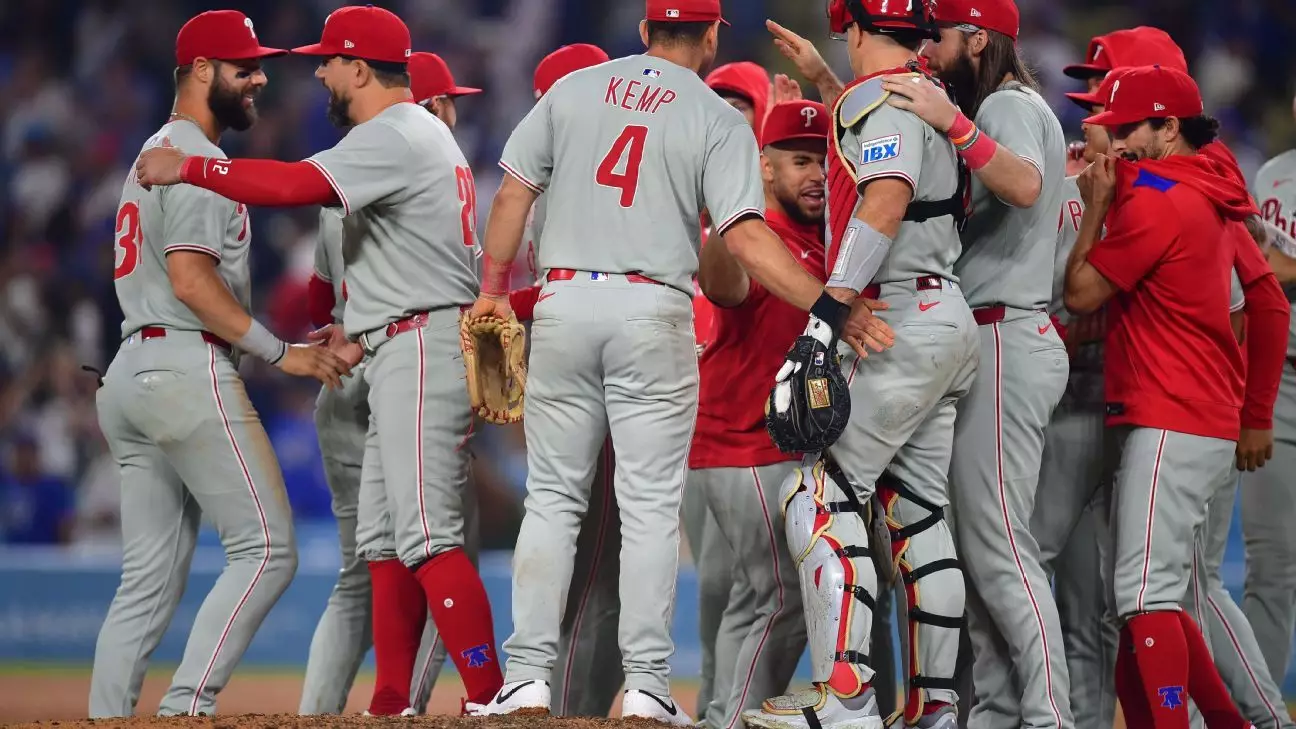
In recent years, Major League Baseball has increasingly become a spectacle that blurs the line between professional sports achievement and public spectacle. As the Philadelphia Phillies celebrate their division title with champagne showers and boisterous revelry, critics might wonder whether this exuberance demonstrates genuine team unity or masks underlying tensions. While celebrating hard-earned victories is essential for morale, there’s a risk that such displays risk undermining the discipline needed to sustain success. Excessive celebrations, especially in an era where mental health and focus are critical, can sometimes hint at a fragile confidence rooted more in fleeting moments of happiness than in resilience.
This culture of exuberance also raises questions about humility and long-term accountability. Celebrating a division win, especially one achieved after overcoming injuries and setbacks, is justifiable. But when celebrations turn into near-ritualistic displays—like pouring champagne over oneself or chugging beer with wild abandon—it can border on hubris. Does this exuberance foster a winning mentality, or does it create complacency that ultimately breeds overconfidence? In the Phillies’ case, their passionate celebrations could serve as a motivating force, but they risk cultivating an illusion of invincibility that might falter in the pressure cooker of October baseball.
The Path to the Postseason: Is Confidence Masquerading as Overconfidence?
The Phillies’ season has been marked by resilience and strategic acumen, yet their journey toward the postseason also highlights a propensity to rely on moments of brilliance that could obscure fundamental vulnerabilities. Leading the NL East with only a few games remaining, they have demonstrated grit—coming from behind to edge out perennial powerhouses like the Dodgers. However, their story isn’t one of dominance but of perseverance, often fueled by clutch performances from unexpected heroes.
Relying on players with injury concerns, such as Trea Turner and Alec Bohm, raises questions about whether their current success is sustainable or merely a temporary spike fueled by adrenaline and momentum. The loss of Zack Wheeler, a cornerstone of their pitching staff, could be a sign of future instability, unless deeper organizational strength is genuinely tested. Here, the optimism of fans and management may dangerously verge on overconfidence. If the Phillies’ identity is built primarily on extraordinary moments rather than consistent excellence, their perceived resilience might be a fragile veneer that disintegrates under the intense pressure of a postseason where every mistake is magnified.
The Significance of Strategic Flexibility in a Playoff-Ready Team
One of the most noteworthy aspects of the Phillies’ narrative is their tactical versatility—a team that can slug when needed but also play “small ball” to grind out victories. This duality is promising. However, it also serves as a vanity project that could prematurely inflate their capabilities. Are they truly adaptable, or are they just appealing to short-term needs, relying on a haphazard mix of strategies to escape adversity?
Manager Rob Thomson’s leadership seems to be the glue holding the team together, and his ability to adapt tactics is commendable. Still, the broader question is whether the team’s roster depth is robust enough to withstand the brutal grind of October baseball. Injuries to key players and overreliance on clutch moments expose vulnerabilities that, if unaddressed, could be exploited by savvy playoff opponents. Success requires more than celebration and versatility; it demands discipline, consistency, and humility—traits that only emerge through relentless self-criticism and continuous improvement.
Are the Phillies Truly a Contender or Just Riding a Wave of Momentum?
The exhilarating narrative of this Phillies season is undoubtedly a feel-good story—an underdog team defying odds, recovering from setbacks, and seizing the division crown earlier than anticipated. Yet, beneath this surface lies a skepticism rooted in the reality that momentum alone is insufficient to claim a World Series. Historically, many teams have celebrated bravely only to suffer from the burnout of overconfidence or the complacency of assuming victory is imminent.
While their recent 29-14 surge post-trade deadline signals strategic smartness, it also reveals a team that’s riding high on adrenaline rather than unwavering consistency. Postseason play is a brutal test—one that rewards steadiness as much as flair. If the Phillies view their division title as the ultimate achievement, they risk overlooking the depth of competition awaiting them in October. True contenders are defined not just by their ability to win, but by their capacity for humility, self-awareness, and relentless focus beyond the glitter of celebrations.
The Myth of the Resilient Underdog: A Call for Self-Reflection
It is tempting to lionize teams like the Phillies, who, despite injuries and adversity, persevere against the odds. However, this narrative often obscures a vital truth: complacency and overconfidence can quickly unravel even the most spirited efforts. The excitement fostered by recent wins and celebrations is a necessary fuel, but it should not eclipse the vital importance of ongoing self-criticism.
The most successful teams are those deeply aware of their weaknesses and committed to constant growth. For the Phillies, that means recognizing their vulnerabilities—be it bullpen depth, injury management, or strategic consistency—and addressing them without letup. Self-scrutiny in professional sports is not a sign of weakness but a mark of maturity. Overestimating their own resilience because of one season’s momentum might set them up for a harsh fall when the inevitable challenges of playoff baseball confront them.
This season’s celebration should serve as motivation—but also as a stark reminder that true greatness lies in humility and continuous self-assessment. If the Phillies are to translate their wild success into postseason glory, they must transition from celebration to calculated, disciplined excellence rooted in unflinching self-awareness. Only then can they hope to avoid the hubris that has, historically, doomed many promising teams in the crucible of October baseball.