
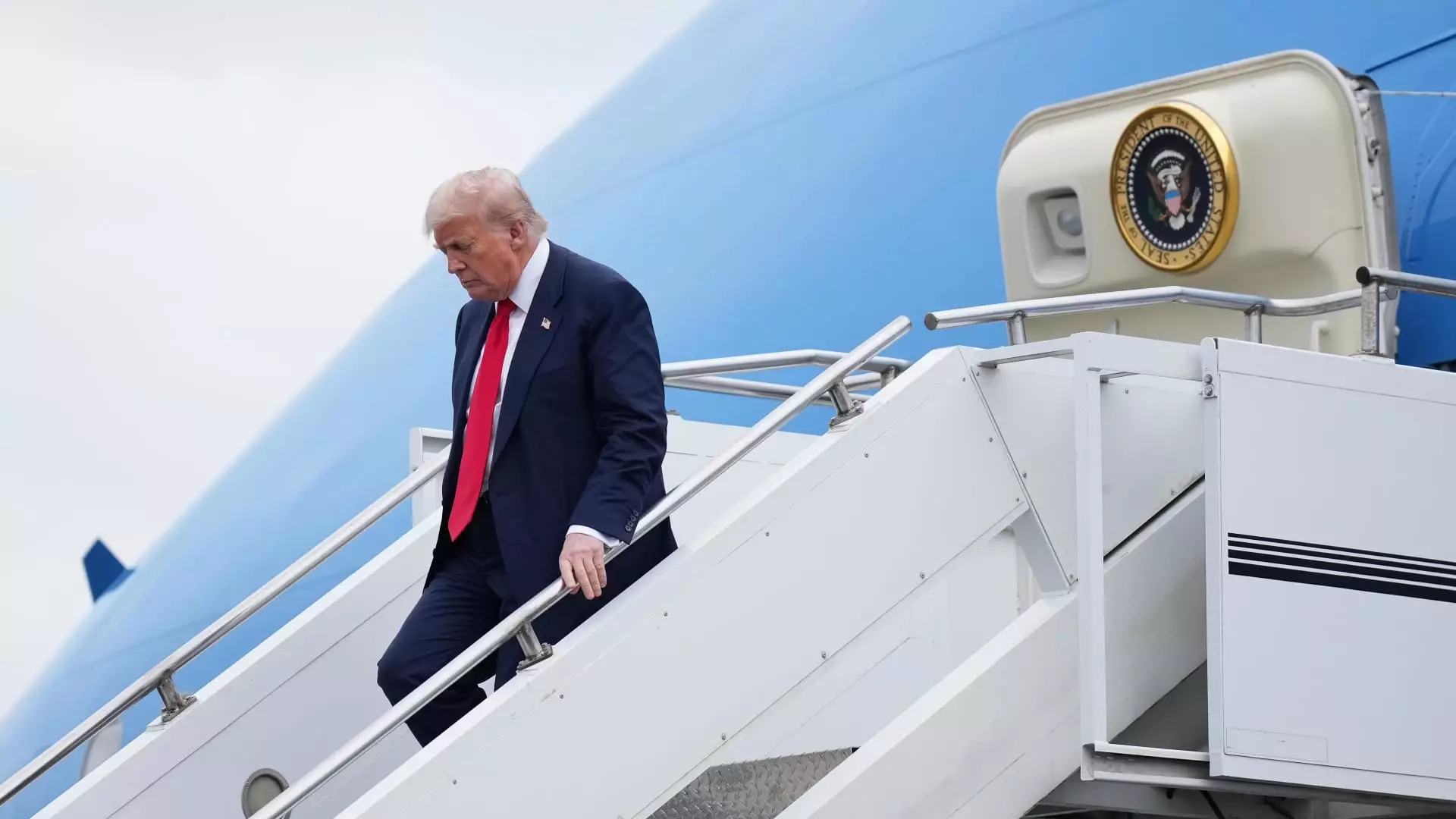
In the midst of political turbulence and economic uncertainty, the looming threat of a trade war between the European Union and the United States has ignited fears far beyond their borders. The scheduled meeting between European Commission President Ursula von der Leyen and U.S. President Donald Trump exemplifies a broader crisis of diplomacy, where short-term interests threaten to unravel a partnership that has historically served as the backbone of the global economy. While negotiators portray the talks as hopeful, the reality is that both blocs are deeply entrenched in a status quo of brinkmanship that could have calamitous consequences, especially for smaller economies that depend on stable transatlantic relations.
This impending confrontation isn’t merely about tariffs; it symbolizes a fundamental clash of economic philosophies and geopolitical ambitions. The aggressive stance of the U.S. in threatening tariffs up to 30% on EU goods is a clear indication of America’s desire to reshape trade relationships to favor its own industries, often at the expense of multilateralism. Conversely, the EU’s readiness to consider countermeasures underscores a growing frustration, revealing that these negotiations are just the latest battleground in a larger struggle over who controls the rules of international commerce. If these tensions escalate, they could fracture the very fabric of the global trading system, leading to a cascade of protective measures and retaliations that stifle innovation and growth across continents.
The Risks of a Short-Sighted Deal and Its Global Ramifications
The alleged pursuit of a quick fix, with potential tariffs around 15%, borders on a desperate attempt to stave off economic damage. While some analysts argue that even a modest agreement might prevent higher tariffs and retaliation, such compromises risk entrenching flawed priorities. A hastily negotiated deal lacks the comprehensive safeguards necessary to promote fair trade, climate action, and technological cooperation—areas where Europe and the U.S. should collaboratively lead rather than compete.
Moreover, Trump’s reference to a similar deal with Japan reflects an unsettling pattern: a tilt towards transactional agreements that prioritize short-term political wins over long-term strategic alliances. Japan’s deal, capped at a 15% baseline tariff, may serve immediate political purposes, but it undermines the multilateral approach needed in today’s interconnected world. When the world’s largest economies settle for “good enough” rather than “the best,” it signals a retreat from global leadership responsibilities and calls into question the sustainability of the rules-based order.
The risk is that this confrontation could set a precedent for similar friction elsewhere—be it with China, India, or emerging markets—potentially spiraling into a fragmented and destabilized global economy. The interconnectedness that once fueled unprecedented growth now hangs in the balance as the U.S. and EU appear willing to jeopardize longstanding relations for fleeting political leverage. That mindset signifies a shortsightedness that could cost millions their livelihoods and undo decades of diplomatic progress.
Center-Left Vision: A Call for Diplomatic Prudence and Inclusive Growth
From a center-wing liberal perspective, it’s clear that the path forward must be rooted in diplomacy, shared responsibility, and multilateral cooperation. While the desire to protect domestic industries is understandable, wielding tariffs as a primary tool threatens to escalate into a broader trade war that disproportionately punishes vulnerable populations and developing economies. It is essential that Europe and the U.S. recognize that their economic strength is derived from collaboration—not confrontation.
Rather than perpetuating a cycle of tariffs and retaliations, both sides should prioritize inclusive growth strategies that address the root causes of economic disparity. Climate policies, digital regulation, and fair labor standards must be integral to future agreements—a move towards shared values rather than mere market access. Protecting the global commons and maintaining stability in international trade should outweigh immediate political gains. As history has shown, protectionism breeds stagnation while cooperation paves the way for sustainable prosperity.
The upcoming negotiations are more than a mere technical matter—they are a litmus test for global leadership and the responsibility that comes with it. The EU and U.S. stand at a crossroads, either working together to reinforce an open and fair international trading system or succumbing to the temptations of short-term nationalist policies. The choices made in Scotland over the weekend will echo for decades to come, shaping the economic and geopolitical landscape for generations.